What the Romans Really Ate
When people imagine ancient Rome, they often picture grand banquets, reclining senators, and tables groaning under exotic dishes. While lavish feasts did exist, they represented only a small slice of Roman life. Most Romans ate simple, repetitive meals based on a few key ingredients. Ancient Roman cuisine was shaped by class, geography, trade, and tradition—and it looked very different from modern Italian food.
The Staples of the Roman Diet
At the core of Roman cuisine were a few fundamental foods:
Grains: The Basis of Every Meal
Grain—especially wheat—was the foundation of the Roman diet.
Bread (panis) was the primary staple for many city-dwellers, particularly in the imperial capital, where grain was imported on a massive scale.
Porridge (puls) made from emmer wheat, barley, or other grains was common among poorer Romans and in earlier periods of the Republic. It could be plain or mixed with vegetables, herbs, and sometimes bits of meat.
Grain was so important that the state managed grain distributions (the annona) to keep the urban poor fed and politically calm.
Legumes, Vegetables, and Fruits
The Roman table featured a wide variety of plant foods:
Legumes: Lentils, chickpeas, broad beans, and peas provided essential protein.
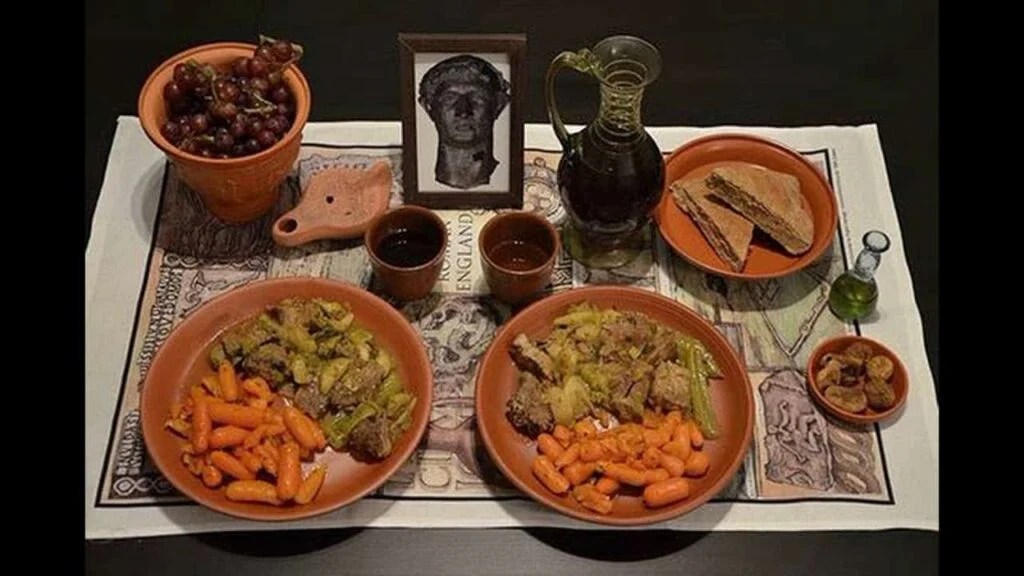
Vegetables: Cabbage, leeks, onions, garlic, turnips, carrots (often purple or yellow, not the modern orange), celery, and beets were widely eaten.
Fruits: Apples, pears, plums, cherries, figs, grapes, and pomegranates were common. Dried fruits, especially figs and raisins, were important sources of sweetness and energy.
Seasonality mattered. Many foods were eaten fresh in season, then dried, pickled, or preserved in oil, vinegar, or honey for the rest of the year.
Olive Oil and Wine
Two products defined Mediterranean food culture, and Rome was no exception:
Olive oil was used for cooking, dressing vegetables, and preserving foods. It was also burned in lamps and used in bathing and body care.
Wine was the standard drink, consumed diluted with water. Undiluted wine was considered barbaric. Wines varied widely in quality, from cheap sour varieties for the poor to aged and spiced wines for the elite.
Meat, Fish, and Protein
Contrary to the image of endless roasted meat, most Romans did not eat large quantities of meat on a daily basis.
Meat
Pork was the most commonly eaten meat, especially in sausages and cured products.
Beef was less common and often came from older draft animals.
Sheep and goats provided both meat and dairy products.
Poultry such as chickens, ducks, and geese appeared on tables when available, especially among the wealthier classes.
Wild game—boar, deer, birds—was prestigious and usually associated with elite hunting and banquets.
For the majority of the population, meat was a luxury, eaten in small amounts, on special occasions, or as flavoring rather than the central element of a dish.
Fish and Seafood
Romans loved fish and seafood, especially in coastal regions:
Fresh fish was highly prized and could be extremely expensive. Wealthy Romans even kept fish ponds (piscinae) for a steady supply.
Salted and preserved fish were widely traded across the empire, making fish protein accessible to more people.
Shellfish such as oysters and mussels appeared at upscale meals.
Most famous of all fish products was garum, a fermented fish sauce.
Garum: The Ubiquitous Fish Sauce
One of the defining flavors of Roman cuisine was garum, a pungent sauce made by fermenting fish (often small fish or fish entrails) with salt in the sun until it liquefied.
It functioned much like modern soy sauce or Southeast Asian fish sauces: added to stews, vegetables, meats, and even some desserts.
Different regions produced distinct varieties; some brands were so prized they were traded over long distances and sold at high prices.
Garum allowed cooks to add saltiness and umami to otherwise simple dishes.
To modern tastes, the idea may seem unappealing, but for Romans it was an everyday seasoning, present in countless recipes preserved in the cookbook attributed to Apicius.
Eating by Class: Poor vs. Rich
Ancient Roman cuisine varied dramatically between social classes.
The Diet of the Poor
For slaves, laborers, and the urban poor, food was simple and repetitive:
Breakfast (ientaculum) might be bread with cheese, olives, or leftover beans.
Lunch (prandium) was light—more bread, perhaps some cold leftovers, fruit, or a little wine.
Dinner (cena) was the main meal: a porridge or stew of grain and vegetables, sometimes enriched with a small portion of meat, fish, or garum.
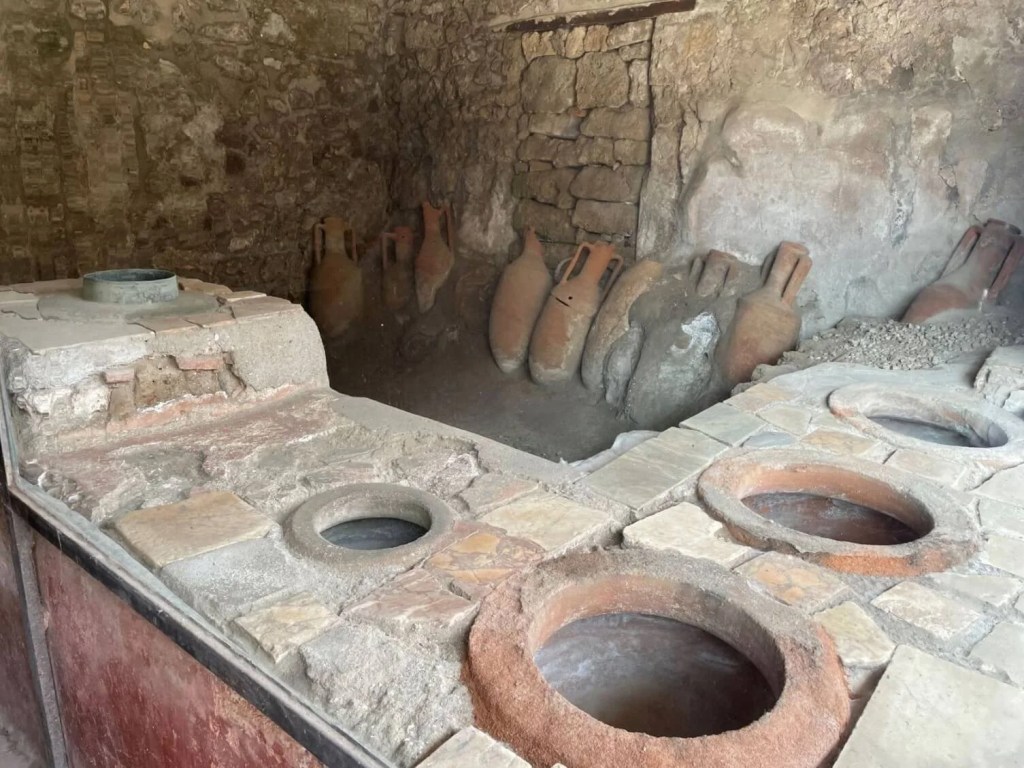
Street food and taverns supplemented home cooking for those without kitchens. Cheap foods included:
Bread and cheese
Puls or simple vegetable stews
Sausages
Wine mixed with water and sometimes herbs
The Cuisine of the Elite
The wealthy, especially during the late Republic and early Empire, used food to display status and sophistication.
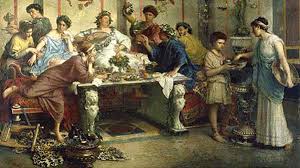
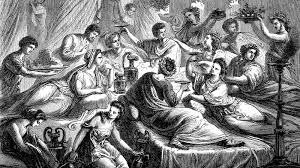
Banquets could feature multiple courses, exotic ingredients, and elaborate presentations.
Hosts competed to impress guests with rare foods (like peacock, flamingo, or imported spices) and extravagant combinations, such as:
Dormice stuffed with minced pork and nuts
Whole pigs served with smaller birds or sausages hidden inside
Elaborate pastries and molded jellies
Yet even at elite tables, meals typically began with familiar elements: eggs, salad greens, olives, and bread.
A Typical Roman Meal Structure
By the imperial period, a typical Roman day’s meals looked like this:
Ientaculum (Breakfast)
Light and simple: bread, cheese, olives, dried fruit, and watered wine or milk, often eaten quickly.
Prandium (Midday Meal)
A modest meal, sometimes just cold leftovers or a small snack. For many workers, this was eaten outside the home.
Cena (Main Meal)
Taken in the late afternoon or evening. Among the poor it might be a one-dish porridge or stew. Among the wealthy it could become a multi-course banquet with:
Gustatio: starters (eggs, salads, olives, shellfish) often with mulsum (wine mixed with honey).
Prima mensa: main courses (meat, fish, vegetables).
Secunda mensa: “second table” – fruit, nuts, sweets, and desserts.
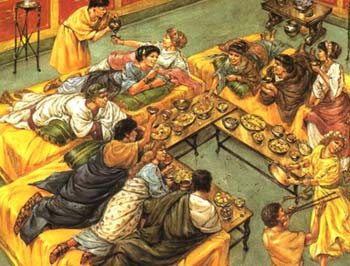
Guests at elite dinners reclined on couches arranged around a low table in the triclinium, a formal dining room. Seating and couch placement reflected social rank.
Flavors and Seasonings
Roman cooks had a wide palette of flavors:
Herbs: dill, coriander, mint, rosemary, thyme, lovage.
Spices (often imported and expensive): black pepper, long pepper, ginger, cinnamon, saffron.
Sweeteners: honey was the main sweetener; sugar was unknown in the Roman world.
Vinegar: used in sauces, marinades, and drinks (such as posca, a sour wine/vinegar drink common among soldiers).
Condiments: garum, salted herbs, must (reduced grape juice), and flavored oils.
Roman recipes often combined sweet, sour, salty, and spicy notes in ways that might surprise a modern palate—for example, meat cooked with honey, vinegar, and fish sauce, flavored with pepper and herbs.
Regional and Cultural Influences
The Roman Empire was vast, and its cuisine absorbed influences from conquered regions:
Greek influence was strong in the early periods, especially in southern Italy and Sicily. Many refined cooking techniques and dishes were considered “Greek.”
Eastern provinces contributed spices, nuts, and new fruits.
Egypt and North Africa supplied grain, vegetables, and fish products.
Gaul and Hispania introduced local cheeses, wines, and cured meats.
In turn, Roman foodways spread across the empire, blending with local traditions. Archaeology at sites like Pompeii and Herculaneum, as well as in Roman Britain and Gaul, shows a mixture of local and Roman preferences.
Cooking and Kitchens
Not every Roman home had a full kitchen. Many urban apartments (insulae) were small and prone to fire, so:
Poorer residents relied on communal ovens, street vendors, and taverns.
Wealthy households had kitchens with hearths, ovens, and a staff of slaves who prepared meals.
Common cooking methods included:
Boiling and stewing in pots
Roasting over open fires
Baking in clay or brick ovens
Frying in pans with olive oil
Clay and bronze cookware has been found in large quantities in archaeological sites, showing a well-developed material culture of cooking.
Sample Roman-Style Dishes
While surviving recipes are limited and often aimed at the upper classes, they provide a glimpse into Roman tastes. Adapted for modern readers, typical dishes included:
Moretum: a herb and cheese spread made by pounding fresh cheese with garlic, herbs, olive oil, and sometimes nuts, eaten with bread.
Lentil or chickpea stew: flavored with leeks, coriander, and garum.
Patinae (casseroles): layered dishes of vegetables, eggs, and sometimes meat or fish, baked in dishes similar to modern frittatas or quiches (without pastry).
Fruit desserts: figs or apples baked with honey, wine, and spices.
These dishes show a cuisine that could be hearty and rustic, but also complex and highly seasoned.
Conclusion: Beyond the Stereotypes
Ancient Roman cuisine was more than extravagant feasts and mythical decadence. It was:
A daily reality of bread, porridge, beans, and cheap wine for the majority.
A social tool, used by the elite to display wealth, cultural sophistication, and political power.
A fusion cuisine, drawing on influences from across the Mediterranean and beyond.
By examining what Romans ate, how they prepared their food, and how meals were structured, we gain insight not just into their tastes, but into the social, economic, and cultural fabric of the ancient world.
Fortisetliber.com
7/4/2026
 Fortisetliber.com
Leave a comment