
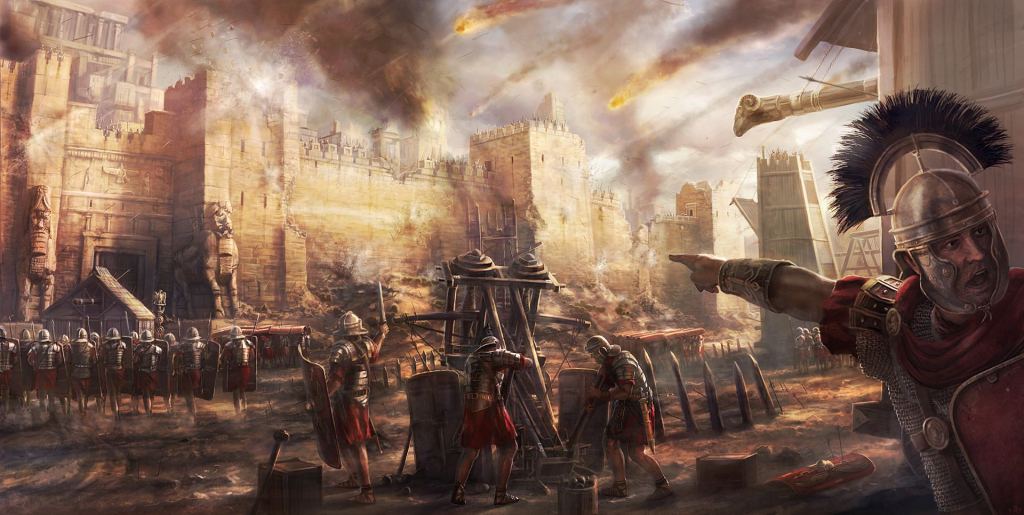
The Roman army is often remembered for its discipline, organization, and relentless expansion. Less well known, but equally important to Rome’s success, were its siege weapons. As Rome confronted walled cities, fortified hilltops, and stubborn strongholds, it developed an impressive array of machines and techniques designed to break, burn, or bypass enemy defenses.
From powerful torsion artillery to towering siege engines, Roman siege warfare combined engineering skill with ruthless efficiency.
Why Siege Weapons Mattered to Rome
In the ancient Mediterranean, cities were frequently protected by thick stone walls, towers, and gates. A field army might win open battles, but without the ability to capture fortified settlements, campaigns could stall.
Roman siege weapons served several key purposes:
- Breaching walls and gates to allow infantry to storm the city
- Suppressing defenders on the ramparts with long‑range missiles
- Providing protected approaches for troops advancing toward the walls
- Psychological intimidation, showing defenders that resistance might be futile
Over time, the Romans refined many devices first developed by the Greeks and other civilizations, standardizing and mass‑producing them within their military machine.
Artillery: Ballistae and Scorpiones
The Ballista
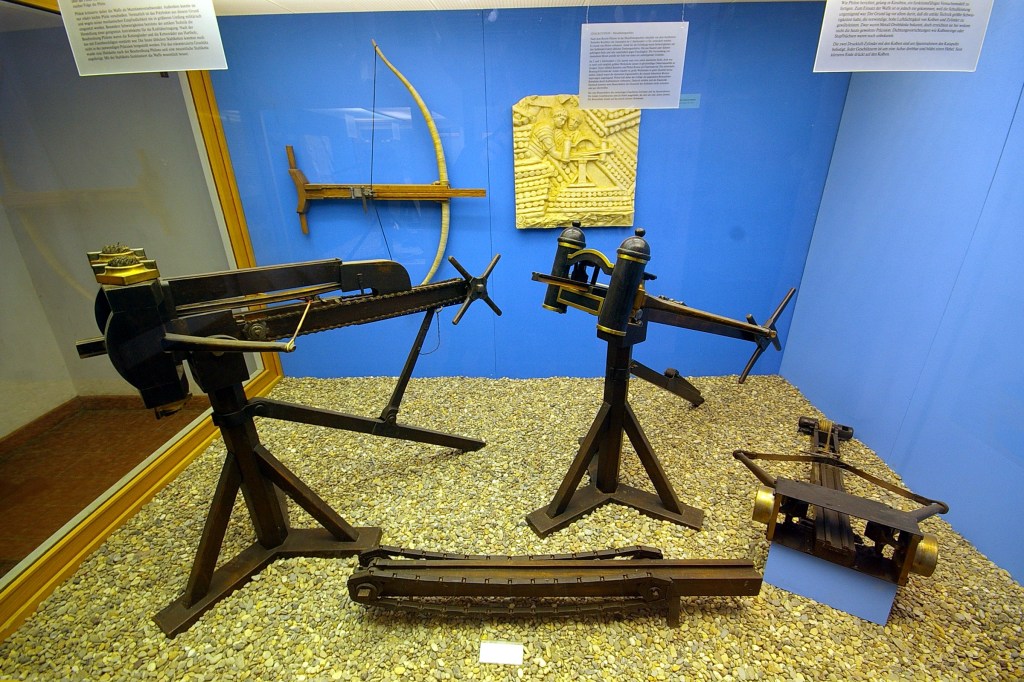
The ballista was a large torsion-powered artillery piece, resembling an enormous crossbow. It used twisted bundles of sinew or rope as springs to store energy.
Key features:
- Fired large bolts (iron-tipped) or stone projectiles
- High accuracy over significant distances
- Used to target enemy soldiers on walls, wooden structures, and occasionally to disrupt formations
Ballistae were often constructed on site from prefabricated parts carried by the legion. They could be mounted on platforms or towers to gain extra range and a better angle over walls.
The Scorpio
The scorpio (plural scorpiones) was a smaller, lighter torsion engine—essentially a compact ballista.
- Fired single bolts with great penetrating power
- Designed to be operated by a small crew
- Used as precision weapons, picking off individual defenders, officers, or artillery crews on the ramparts
In siege contexts, scorpiones helped to clear sections of wall, reducing the defenders’ ability to shoot back at approaching Romans or to interfere with siege works.
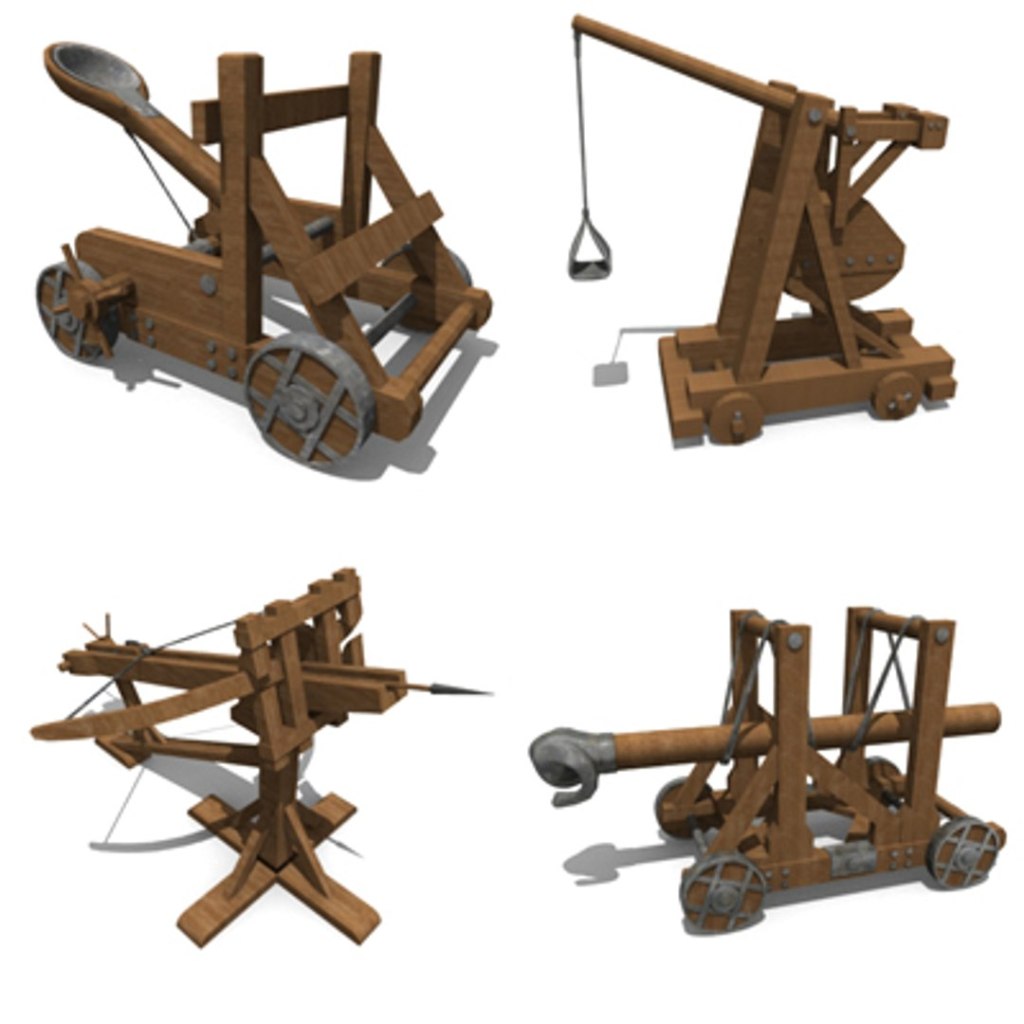
The Onager: Roman Stone-Throwing Artillery
Another key siege engine was the onager, a type of catapult that threw heavy stones in a high arc.
Characteristics:
- A sturdy frame with a single, torsion-powered throwing arm
- Launched stones, incendiary containers, or even small bundles of projectiles
- Ideal for smashing walls, damaging towers, and causing chaos inside a besieged city
Although less accurate than ballistae, onagers delivered devastating impact. Repeated bombardment could weaken masonry, collapse parapets, and make sections of wall unsafe for defenders.
Battering Rams and Testudines
Battering Rams
To directly attack gates or weakened wall sections, the Romans used battering rams (aries in Latin).
- Constructed from heavy timber with an iron or bronze head
- Suspended within a protective wooden structure, allowing it to swing
- Operated by teams of soldiers who rhythmically drove the ram against stone or wood
Over time, repeated blows could crack stones, split gate planks, or dislodge entire sections of wall.
Testudo (Tortoise) Shelters
The attacking crews needed protection from arrows, stones, and burning materials thrown from above. For this, the Romans employed siege shelters, often referred to as testudines (“tortoises”):
- Roofed and sometimes walled with wood, rawhides, and metal plates
- Designed to be fire-resistant, often soaked in water or covered with non-flammable materials
- Allowed engineers and sappers to work close to the walls with a degree of safety
Different types of testudines shielded rams, miners, or soldiers filling in defensive ditches.
Siege Towers: Bringing the Battle to the Ramparts
For especially high or strong walls, the Romans built siege towers—multi-story wooden structures rolled up to the defenses.
Functions of siege towers:
- Carried archers and artillery (like small ballistae) to a height equal to or higher than the city walls
- Provided drawbridges or gangplanks from the top story to the enemy battlements
- Offered cover for troops climbing ladders or approaching the base of the walls
Constructing a siege tower required significant labor and materials. Romans typically assembled them behind cover, then rolled them forward once ready, sometimes under the protection of artillery fire.
Mining, Earthworks, and Other Siege Techniques
Roman siege warfare was not just about machines. It also relied heavily on engineering and manual labor.
Mining (Sapping)
Roman sappers dug tunnels under walls or towers to destabilize them:
- Supports inside the tunnel were set on fire, causing the overlying structure to collapse
- Sometimes used to bypass walls and gain entry into the city
Defenders might counter with counter-mines to intercept Roman tunnels or by reinforcing foundations.
Siege Ramps and Earthworks
In some famous episodes, Romans built vast earth ramps to reach otherwise inaccessible positions:
- At Masada (73–74 CE), the Romans constructed an enormous ramp to bring siege equipment up to the fortress
- Ramps allowed rams, towers, and troops to reach the same level as enemy walls
Romans also built circumvallation lines—encircling fortifications and ditches—to cut off a city from outside support and prevent breakout attempts.
Logistics and Organization
A crucial factor in Roman siege success was organization:
- Standardized tools and prefabricated components sped up construction
- Engineer units (fabri) specialized in carpentry, masonry, and machine-building
- Legions carried basic materials and could also source timber and stone locally
Sieges could last weeks or months, demanding steady supplies of food, water, and building materials. Rome’s administrative and logistical systems allowed its armies to maintain pressure over long periods.
Famous Roman Sieges
A few notable examples highlight Roman siege capabilities:
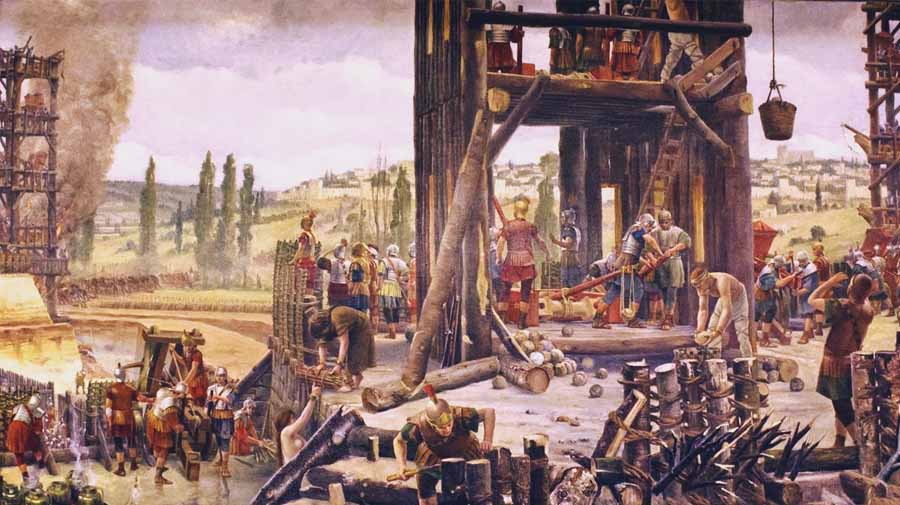
- Siege of Alesia (52 BCE) – Julius Caesar encircled Vercingetorix’s forces with dual lines of fortifications, using earthworks and towers to withstand attacks from both inside and outside the city.
- Siege of Jerusalem (70 CE) – The Romans used battering rams, towers, and sustained assaults to break through the city’s massive defenses, eventually destroying the Temple.
- Siege of Masada (73–74 CE) – An immense siege ramp allowed the Romans to bring siege engines to the summit of the desert fortress.
In each case, a combination of engineering, siege engines, and relentless pressure ultimately overcame determined defenders.
Legacy of Roman Siege Warfare
Roman siege weapons and methods influenced later medieval and early modern warfare. While new technologies—such as gunpowder artillery—eventually replaced torsion engines and wooden towers, the principles remained similar:
- Neutralize defender advantages
- Bring overwhelming force to a specific point
- Combine technology, engineering, and infantry in a coordinated effort
The Romans did not invent every siege device they used, but they mastered the art of integrating these tools into a highly organized military system. Their siege weapons were not just machines—they were symbols of imperial power, demonstrating that, given enough time and resources, few walls were truly impregnable.
9/4/2026
 Fortisetliber.com
Leave a comment