
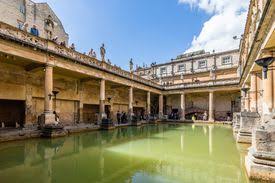
When we imagine the ancient Romans, we often think of grand temples, bustling forums, and powerful emperors. Less obvious—but just as important to everyday life—was hygiene.
The Romans developed surprisingly advanced systems for cleanliness, public health, and waste management. Their practices were not “modern” in a scientific sense, but compared to many other ancient societies, Roman hygiene was remarkably sophisticated.
1. Water: The Foundation of Roman Cleanliness
Aqueducts and Water Supply
Roman hygiene began with one essential resource: water.
From the 4th century BCE onward, the Romans built aqueducts—massive engineering structures that carried fresh water from distant springs and rivers into cities.
- Aqueducts supplied public fountains, baths, latrines, and private homes (for the wealthy).
- A constant flow of water helped rinse away waste and keep some public spaces cleaner.
- Access to water was also a political statement: emperors and magistrates gained prestige by funding new aqueducts.
Public Fountains and Everyday Use
Most Romans did not have running water at home. Instead, they fetched water from public fountains.
- People used this water for cooking, washing, and some basic personal hygiene.
- Water from fountains flowed continuously, which helped prevent stagnation and reduced (though did not eliminate) contamination.
2. Public Baths: Social Centers of Cleanliness
The Roman Bathing Routine
Perhaps the most famous aspect of Roman hygiene is the public bath, or thermae.
Bathing was not just about getting clean; it was a daily social and cultural ritual.
A typical visit to a large bath complex included:
- Undressing in the apodyterium (changing room).
- Exercise in the palaestra (courtyard or gym) to work up a sweat.
- Warming up in the tepidarium (warm room).
- Sweating in the caldarium (hot room), similar to a steam room.
- Cooling off in the frigidarium (cold plunge pool).
Cleaning the Body
Romans did not usually use soap in the modern sense. Instead, they:
- Oiled their skin with olive oil or scented oils.
- Scraped off the mixture of oil, sweat, and dirt with a metal tool called a strigil.
- Sometimes used abrasives like fine sand or pumice to exfoliate.
This process removed surface grime and left the skin smooth, though it did not kill germs in the way modern soap and disinfectants do.
Social and Cultural Role of Baths
Baths were:
- Social hubs: People met friends, conducted business, and shared news.
- Cultural venues: Some complexes included libraries, gardens, and lecture halls.
- Relatively affordable: Many public baths were inexpensive or subsidized, allowing even poorer citizens to participate.
For Romans, regular bathing was part of being “civilized” and Roman, contrasting themselves with “barbarian” peoples they considered less clean.
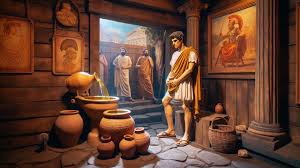
3. Toilets and Waste: The Less Glamorous Side
Public Latrines
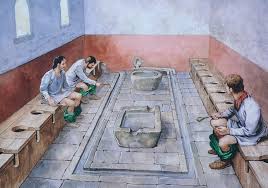
Roman cities often featured public latrines—multi-seat toilets built over channels of running water.
- Seats were arranged side by side, with no partitions, reflecting very different ideas about privacy.
- Fresh water flowed underneath, carrying waste into sewers or nearby water sources.
- Some latrines had decorative mosaics and stone seats, indicating that even these spaces could be relatively elaborate.
The Tersorium: A Shared Cleaning Tool
Instead of toilet paper, many Romans used a tersorium:
- A sponge attached to a stick, rinsed in a water channel or bucket of water and vinegar.
- These sponges were shared, which from a modern perspective posed obvious hygiene risks.
- Despite flowing water, contamination and disease could still spread easily.
The Cloaca Maxima and Sewage
Rome’s most famous sewer, the Cloaca Maxima, originally drained marshes around the Forum and later carried wastewater out of the city.
- It collected runoff from streets, latrines, and bathhouses.
- While impressive, it did not prevent all sanitation problems; waste could still pollute rivers and groundwater.
- Romans had some awareness of bad smells (miasma) as unhealthy, though they did not understand germs.
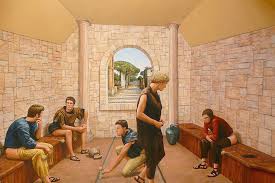
4. Personal Grooming and Domestic Hygiene
Hair, Beards, and Barbers
Grooming was a visible sign of status and identity.
- Barbers (tonsores) ran shops where men had hair and beards trimmed, shaved, and styled.
- Changing beard fashions could reflect broader cultural trends—for example, the clean-shaven look of early emperors versus the bearded style later.
- These shops were social spaces, not unlike modern barbershops.
Dental and Oral Care
Romans did practice some form of dental care, though it was limited:
- They used toothpicks and rudimentary tooth powders made from crushed bones, charcoal, or shells.
- Ancient sources mention mouthwashes, sometimes using wine or vinegar.
- Despite these efforts, tooth decay and gum disease were common.
Household Cleanliness
In wealthier homes:
- Slaves or servants handled much of the cleaning.
- Floors could be swept and sprinkled with water to reduce dust.
- Perfumes and incense helped mask unpleasant smells.
Poorer households, cramped apartment blocks, and densely populated neighborhoods had far more limited options, leading to higher exposure to dirt, smoke, and waste.
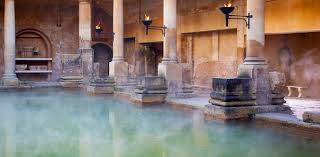
5. Medicine, Beliefs, and Public Health
Medical Theories and Cleanliness
Roman medical ideas were influenced by Greek theories, especially those of Hippocrates and later Galen.
- Health was thought to depend on balancing bodily “humors” (blood, phlegm, yellow bile, black bile).
- Cleanliness, fresh air, and moderation in diet and exercise were believed to support this balance.
- Some physicians recommended baths, massages, and particular diets as part of treatment.
Even without knowledge of bacteria or viruses, Romans recognized that:
- Crowded, dirty areas were unhealthy.
- Stagnant water and foul smells could be dangerous.
- Clean water and regular bathing were beneficial.
Epidemics and Limitations
Despite their infrastructure:
- Plagues and epidemics still struck the Roman world.
- Overcrowding, poor housing conditions, and limited understanding of contagion meant that disease could spread rapidly.
- Hygiene measures helped, but they were far from a complete public health system in the modern sense.
6. Hygiene, Status, and Identity
Class Differences
Access to hygiene was deeply shaped by social status:
- The elite could build private baths at home, employ servants for washing clothes and cleaning, and enjoy better housing with more space and light.
- The urban poor relied on public facilities, lived in cramped insulae (apartment blocks), and had fewer ways to avoid filth and disease.
- Slaves often did the hardest—and dirtiest—cleaning work, from emptying chamber pots to maintaining baths.
Roman vs. “Barbarian”
Hygiene also played a role in Roman identity:
- Romans often contrasted their bathing culture and cleanliness with the habits of peoples they labeled “barbarians.”
- Regular bathing, trimmed hair, and clean clothing became part of what it meant to be Roman and civilized, at least in elite ideology.
7. How “Clean” Were the Romans Really?
By modern standards, Roman hygiene had serious limitations:
- No understanding of microbes or how diseases truly spread.
- Shared tools like sponges and communal baths could transmit infections.
- Waste often ended up in rivers or fields used for agriculture.
Yet, compared to many other ancient societies, Romans:
- Invested heavily in water supply and drainage.
- Made public bathing widely accessible.
- Linked personal cleanliness with health, status, and civic life.
Their systems were not perfect, but they represented a major step in the long history of public health and urban sanitation.
Conclusion
Ancient Roman hygiene combined impressive engineering, everyday habits, and cultural values. Aqueducts, baths, latrines, and grooming practices all reflected a society that took cleanliness seriously—though in ways very different from our own.
Studying Roman hygiene helps us see both how far human societies have come in understanding health, and how much of our modern thinking about cleanliness, public infrastructure, and civic identity has roots in the ancient world.
9/4/2026
 Fortisetliber.com
Leave a comment