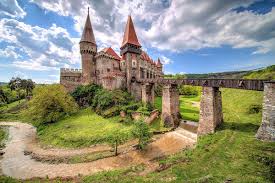
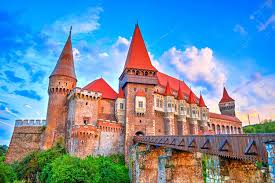
Perched on a rocky outcrop above the Zlaști River in Hunedoara, Romania, Corvin Castle (also known as Hunyadi Castle) is one of Europe’s most striking Gothic fortresses.
With its soaring towers, pointed turrets, and a dramatic stone bridge over a deep ravine, the castle seems lifted straight from a medieval legend. Today, it stands as both a powerful symbol of Transylvania’s turbulent past and one of Romania’s most visited historic monuments.
Origins: From Fortress to Noble Residence
Corvin Castle dates back to the 15th century, when it was built on the ruins of an older fortification. The site originally served as a strategic stronghold, guarding important trade routes and defending the region from invasions.
The castle is most closely associated with John Hunyadi (Ioan de Hunedoara), a powerful military leader and voivode (governor) of Transylvania. In the mid‑1400s, Hunyadi transformed the old fortress into an impressive residence befitting his status. Under his patronage, Corvin Castle grew into a complex of halls, towers, and courtyards that combined defensive strength with architectural refinement.
Over the centuries, the castle passed through various noble families. Each added their own modifications and decorative elements, leaving behind a layered structure that reflects changing styles, tastes, and political realities.
Architecture: Gothic Drama with Renaissance Elegance
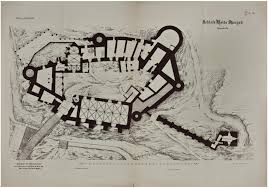
Corvin Castle is often described as one of the finest examples of Gothic architecture in Romania, yet its appearance is the result of multiple building phases.
The Outer Image: Towers, Turrets, and the Bridge
From the outside, several features immediately stand out:
- The long stone bridge leading to the main gate, spanning a deep ravine and emphasizing the castle’s defensive character.
- Tall, conical-roofed towers that give the silhouette a fairy‑tale quality, particularly the Neboisa Tower (“Do Not Be Afraid”) and the Capistrano Tower.
- Fortified walls and bastions, designed to repel attacks and provide vantage points for archers and artillery.
These elements were not just symbolic. In the 15th and 16th centuries, Transylvania faced constant threats—from Ottoman incursions to internal conflicts—making Corvin Castle not only a residence but also a formidable fortress.
Interior Spaces: Great Halls and Private Chambers
Inside the walls, Corvin Castle reveals a more refined side:
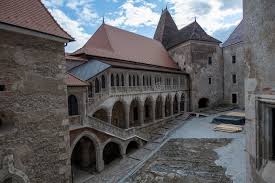
- The Diet Hall (Great Hall) – One of the most impressive spaces, used for ceremonies, receptions, and possibly sessions of the Transylvanian Diet (assembly). It features large windows, ribbed vaults, and decorative stonework characteristic of late Gothic style.
- The Knight’s Hall – A grand room that likely hosted feasts and gatherings of soldiers and dignitaries. Its columns and arches create a sense of weight and rhythm.
- Private chambers and chapels – Reflecting the everyday life and religious devotion of the noble families who lived here.
Later renovations introduced Renaissance influences, visible in certain windows, loggias, and ornamental details. As a result, the building presents a blend of Gothic grandeur and later stylistic touches.
Legends, Myths, and Dark Stories
Like many medieval castles, Corvin Castle is wrapped in legends that blend historical fragments with imaginative storytelling.
The Legend of the Raven
One of the most famous tales explains the origin of the Corvin family coat of arms: a raven (Latin corvus) holding a golden ring in its beak. According to the legend, John Hunyadi was the illegitimate son of a nobleman and a local woman. When the boy’s noble father gave his mother a golden ring to prove the child’s origin, a raven supposedly tried to steal it. Young Hunyadi killed the bird with an arrow and retrieved the ring. Inspired by this story, the family adopted the raven as their heraldic symbol.
Although historians debate the authenticity of this tale, it has become closely tied to the castle’s identity and contributes to its aura of mystery.
The Well of the Three Prisoners
Another popular story revolves around a well supposedly dug by three Turkish prisoners, promised their freedom once they reached water. After 15 years of labor, the men finally struck a water source. According to the legend, the lady of the castle then refused to free them and had them killed instead. The words carved near the well—long interpreted as “You have water, but no soul”—were once thought to confirm the story, though modern interpretations suggest the inscription is simply a religious text.
Regardless of its historical accuracy, the legend adds a tragic, human dimension to the imposing stone walls.
Prisoners and Dracula?
Some folk stories link Corvin Castle to Vlad the Impaler (Vlad Țepeș), the historical figure who inspired Bram Stoker’s Dracula. It is sometimes claimed that he was imprisoned in the castle for a period in the 15th century. While the evidence is not conclusive, the association with Vlad has helped fuel the castle’s reputation as a dark and atmospheric place, ideal for Gothic tales and ghost stories.
From Ruin to Restoration
By the 17th and 18th centuries, Corvin Castle began to lose its importance as a military stronghold. Fires, neglect, and changes in political power led to periods of decline. At one point, sections of the castle were even used as storage or industrial spaces, far removed from their original function as noble halls.
Systematic restoration efforts began in the 19th century and continued through the 20th and 21st centuries. Some of these reconstructions were guided by the romantic tastes of the era, emphasizing a dramatic, picturesque appearance in line with the popular image of medieval castles.
Today, ongoing conservation work aims to balance historical accuracy with the reality that parts of the castle have been reshaped according to later interpretations. Visitors often remark that Corvin Castle looks “too perfect” to be entirely original—a reminder that what we see is a dialogue between past structures and modern restoration.
Corvin Castle Today: Tourism, Culture, and Film
In modern Romania, Corvin Castle is both a heritage site and a tourist destination. It draws visitors from around the world who are attracted by its architecture, legends, and dramatic setting.
The castle hosts:
- Guided tours through major halls, towers, and courtyards
- Temporary exhibitions on medieval life, weaponry, and local history
- Cultural events, including medieval festivals, concerts, and historical reenactments
Its atmospheric interiors and exteriors have also made it a popular location for films, documentaries, and TV productions, especially those seeking a convincing medieval or Gothic backdrop.
Visiting Corvin Castle: Practical Information and Tips
For those planning a visit, Corvin Castle is located in Hunedoara, in western Romania, and is accessible from major cities like Cluj-Napoca, Timișoara, and Sibiu by road and rail.
A few practical tips enhance the experience:
- Allow enough time – Plan at least two to three hours to explore the courtyards, halls, and towers without rushing.
- Wear comfortable shoes – The floors are often uneven, with stone steps and narrow passages.
- Check opening hours and events – Schedules may vary by season, and special events can affect access to certain areas.
- Consider a guided tour – A knowledgeable guide or audio guide can bring the history and legends to life, especially for first‑time visitors.
- Explore the surroundings – The views from the bridge and towers reveal not only the ravine below but also the surrounding town and hills, offering a sense of the castle’s strategic location.
A Living Symbol of Transylvania’s Past
Corvin Castle is more than a picturesque monument; it is a testament to the power, ambition, and imagination that shaped medieval Transylvania. Its walls have witnessed wars, political intrigues, and everyday life, while its legends continue to evolve with each new generation of visitors.
Whether seen as a Gothic fortress, a noble residence, or a stage for stories of ravens and prisoners, Corvin Castle remains one of Romania’s most compelling historic sites—a place where stone, history, and myth come together in unforgettable fashion.
9/4/2026
 Fortisetliber.com
Leave a comment