
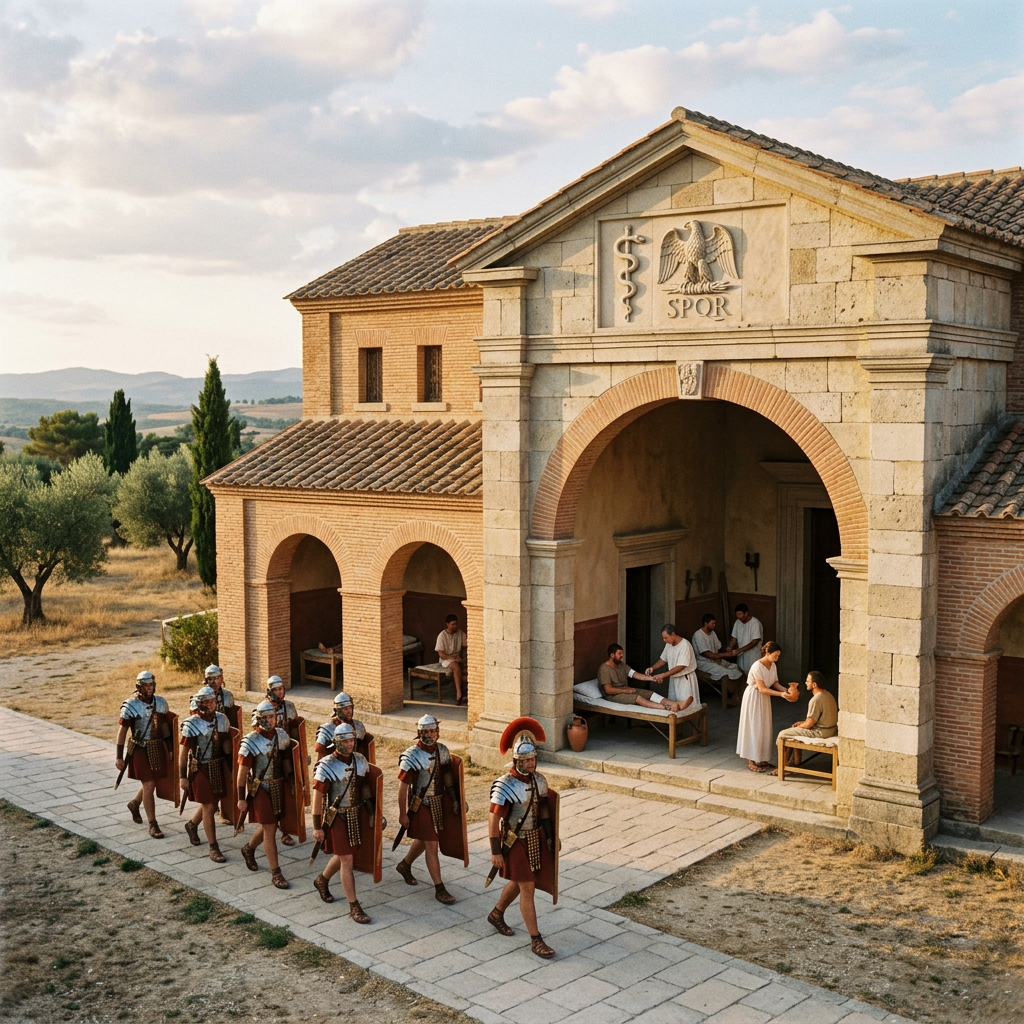
Roman Valetudinaria: Hospitals of the Imperial Army
Roman soldiers marched, fought, and built an empire that stretched from Britain to Mesopotamia. Less well known is the infrastructure that kept them alive. Among the most distinctive institutions of the imperial army were the valetudinaria, permanent military hospitals designed to care for sick and wounded troops.
Far from being improvised tents on a battlefield, these facilities were planned, built, and staffed as part of the army’s routine logistics. They offer a revealing window into Roman attitudes to health, discipline, and military efficiency.
What Was a Valetudinarium?
The word valetudinarium derives from the Latin valetudo, meaning “state of health” or “illness.” A valetudinarium was, literally, a place concerned with health. In everyday Latin, the term could sometimes refer to a place for convalescents or a residence for invalids.
In the military context, however, epigraphic and literary evidence, together with archaeology, suggest that a valetudinarium was a purpose-built hospital within a fort or camp where soldiers received treatment and recovered from wounds and disease.
The earliest clear references date from the first century CE, when the professionalized imperial army was consolidating its long-term frontier bases. By that time, the term seems to have been familiar enough that inscriptions could mention a valetudinarium without further explanation.
The concept appears to have been distinctly military: there is no unambiguous evidence that civilian towns maintained comparable institutions under the same name in this period.

Why Permanent Military Hospitals Emerged
Armies everywhere have always had to cope with injury and disease, but Rome’s imperial forces faced particular challenges that encouraged more systematic solutions. Several factors help explain why permanent hospitals emerged in legionary forts and auxiliary bases.
A Professional Standing Army
From the late first century BCE onward, Rome increasingly relied on a long-service, professional army. Legionaries could serve for twenty or more years. The state had a strong interest in preserving these expensive, trained soldiers rather than simply replacing them when they fell ill or were wounded. Hospitals made it easier to return convalescent men to duty and to minimize the loss of experienced personnel.
Fixed Frontier Garrisons
Under the early Empire, large numbers of troops were stationed permanently along frontiers such as the Rhine, Danube, and eastern provinces. Their forts became semi-permanent communities, with stone buildings, workshops, and storage depots. In such stable environments, it was possible and practical to construct dedicated medical facilities close to where soldiers lived and trained rather than relying on temporary arrangements during campaigns.
Logistics, Morale, and Control
Centralizing medical care in a single, supervised building also served administrative and disciplinary purposes. It allowed officers to control the movements of the sick, to monitor recovery, and to prevent malingering. At the same time, the existence of an established place of treatment and convalescence could help reassure soldiers that they would not be abandoned if injured, supporting morale and the image of the army as a well-provisioned institution of the Roman state.
Where Were Valetudinaria Located in Forts and Camps?
Archaeological excavations of legionary fortresses and auxiliary forts across the Roman Empire have uncovered buildings identifiable as valetudinaria by their characteristic plans. They are typically substantial structures, often among the largest within a fort, and tend to occupy central or well-protected areas rather than the vulnerable perimeter.
In many fortified sites, the hospital stood near the headquarters building (principia) or the commanding officer’s residence (praetorium). This placement reflects its status as a key installation, close to the administrative heart of the camp. At Vindonissa (modern Windisch in Switzerland), a legionary fortress on the upper Rhine, the presumed valetudinarium lay just north of the principia, accessible yet shielded from heavy traffic. Similarly, at Novaesium (modern Neuss in Germany), the hospital complex was centrally positioned within the fortress, again underlining how integral medical care was to the fort’s layout.
Auxiliary forts, which housed smaller, non-legionary units, could also contain dedicated hospitals, though often at a reduced scale. Where space was limited, the valetudinarium might be set slightly away from the busiest streets of the camp to provide a quieter environment while still being close enough for rapid access during emergencies.

Architecture and Main Rooms: Inside a Roman Military Hospital
While there was no single standardized blueprint, many valetudinaria shared a broadly similar architectural vocabulary. Excavations at sites such as Vindonissa, Novaesium, and Carnuntum on the Danube reveal complexes organized around courtyards, with rows of small rooms and service spaces arranged to facilitate both medical care and day-to-day logistics.
Overall Layout and Courtyards
Valetudinaria were typically rectangular complexes, sometimes with an internal courtyard or multiple courtyards. These open spaces provided light, air, and circulation routes between wards and treatment rooms. At Vindonissa, for example, the hospital seems to have been organized around a central yard with covered walkways giving access to rooms on all sides. Such colonnaded corridors offered shelter from the weather and may have allowed patients to take supervised exercise during recovery.
Wards and Patient Rooms
The defining feature of these hospitals is the presence of multiple small rooms opening off corridors or surrounding courtyards. Many of these are interpreted as wards or sickrooms. Frequently they are grouped in pairs or clusters, sometimes with a larger anteroom that could have served for observation or for the storage of bedding and equipment. In several sites, archaeological traces suggest that rooms were designed to hold just a few patients each, perhaps to separate different conditions or stages of recovery.
At Novaesium, one excavated valetudinarium shows a series of regularly spaced rooms along both sides of a corridor, reminiscent in some ways of later hospital wards. The scale of such buildings suggests that a legionary hospital might accommodate dozens, possibly over a hundred, patients at a time, depending on how densely the rooms were furnished with beds or pallets.
Surgery Rooms and Treatment Areas
Specialized treatment rooms are harder to identify with certainty, because their functions left fewer distinctive archaeological traces. Scholars have suggested that some larger chambers near the center of the complex or close to the entrance corridors may have served as reception and surgery rooms. These spaces could accommodate stretchers, allow groups of attendants to work around a patient, and provide natural light from windows or doorways.
Rooms interpreted as operating or major treatment areas often occupy strategic positions between the entrance and the more secluded wards, which would make sense for admitting and sorting new cases. In some hospitals, a room with an attached smaller side-chamber might have functioned as a preparation area for instruments and dressings.
Pharmacies, Stores, and Administrative Rooms
Roman military hospitals needed space to store medicines, bandages, and equipment. Certain rooms with built-in shelving or traces of storage jars have been interpreted as pharmacies or medical storerooms. Here, medical staff could have kept herbal remedies, mineral drugs, wine and vinegar for cleaning wounds, and specialized instruments such as scalpels, forceps, probes, and cautery tools.
Other rooms likely served administrative purposes: keeping records of sick lists, issuing rations to patients, and managing supplies. Given the army’s meticulous approach to documentation in other areas, it is probable that hospital clerks recorded who was admitted, the nature of their condition, and their eventual outcome, even if such documents rarely survive.
Latrines, Baths, and Kitchens
Hygiene and nutrition were critical in any institution dealing with the sick. Many forts already possessed communal latrines and bathhouses, but valetudinaria often had dedicated sanitary and service facilities. Archaeological evidence points to latrines either within or immediately adjacent to hospital complexes, connected to the fort’s drainage system. This arrangement reduced the need for weak or wounded patients to travel long distances and helped isolate potentially infectious waste.
Kitchens or food-preparation rooms, sometimes identified by hearths, ovens, or concentrations of cooking pottery, allowed staff to provide appropriate diets for patients, including broths, porridges, and other easily digestible meals mentioned in Roman medical texts. Water supplies, whether from wells or aqueduct-fed cisterns, were particularly important, and hospitals were often placed where reliable access to water could be ensured.

Admission, Triage, and the Conditions Treated
No handbook of Roman hospital procedures survives, yet by combining military regulations, medical writings, and the built environment, historians can reconstruct the broad outlines of how soldiers entered and moved through these institutions.
From Battlefield or Barracks to Hospital
Severely wounded soldiers during campaigns were likely stabilized in temporary facilities near the fighting—field stations where dressings could be applied and bleeding controlled. Those able to travel would then be transported back to the fortress hospital, either carried by comrades and orderlies or, where possible, moved in carts or on litters. Within the fort, less acute cases, such as fevers or minor injuries, would be sent straight from the barracks to the valetudinarium for observation and treatment.
Triage and Sorting
Some form of triage seems inevitable in these settings, even if it was not articulated in modern terms. Patients had to be assessed quickly to determine urgency, contagiousness, and prospects of recovery. Those with minor ailments might receive outpatient treatment or be kept in larger, more crowded wards, while serious surgical cases or those with dangerous infections would be isolated in smaller rooms.
The placement of larger rooms near entrances and corridors in several valetudinaria suggests initial receiving and assessment areas. From there, orderlies could direct patients to surgery spaces, convalescent rooms, or, in grim cases, to areas where the dying could be made as comfortable as circumstances allowed.
Injuries and Diseases
Roman military hospitals treated a wide spectrum of conditions. Combat generated sword and spear wounds, arrow and sling injuries, fractures from falls or shield blows, and occasionally more severe trauma from siege artillery. Routine garrison life also produced accidents: construction injuries, animal-related wounds, and strains from heavy labor.
Disease was at least as common a threat. Literary sources and skeletal remains indicate the prevalence of fevers (possibly malaria in some regions), respiratory infections, digestive illnesses, and chronic complaints such as joint problems. The close quarters of forts and the stresses of military service created a constant pool of patients needing short- or long-term care.

Medical Staff: Medici, Capsarii, and Orderlies
Valetudinaria did not function on their own; they required a hierarchy of medical personnel, from trained physicians to humble attendants. While the exact internal organization is still debated, several key roles can be identified from inscriptions and literary texts.
Army Doctors: The Medici
The principal medical professionals in the Roman army were the medici (singular medicus). Some were officers on the staff of a legion or auxiliary unit, others were attached to smaller sub-units such as cohorts or cavalry alae. Their training probably combined practical apprenticeship with knowledge drawn from the broader Greco-Roman medical tradition, including authors now grouped under the label “Hippocratic” and, later, the influential Galen.
Some medici had civilian backgrounds and later entered military service; others may have been recruited directly into the army and gained experience there. In major forts, there may have been more than one physician, with some specializing in surgery while others focused on internal medicine or longer-term care.
Dressing-Bearers and Assistants: The Capsarii
Below the physicians were the capsarii, often translated as “dressing-bearers” or “medic orderlies.” The term comes from capsa, a box, referring to the cases in which they carried bandages and basic supplies. These men likely performed first aid on the battlefield, applied and changed dressings, and assisted in the hospital with routine nursing care.
Capsarii probably formed the backbone of day-to-day patient management: monitoring fevers, cleaning wounds, helping patients wash, and ensuring that prescribed diets and medicines were given at the correct times. In an era before complex machinery, human labor was the most important resource in a hospital, and these junior medical personnel would have been indispensable.
Orderlies, Slaves, and Civilian Specialists
A larger supporting cast also played a role. Enlisted soldiers might be seconded as orderlies for cleaning, carrying water, and transporting patients. Slaves belonging to the army or to individual officers could be assigned as attendants or cooks. In frontier zones with strong civilian settlements, local healers and craftsmen—such as makers of splints, prosthetics, or specialist drugs—may have interacted regularly with the hospital staff.
The boundary between military and civilian medicine was porous. Some military doctors treated civilians in nearby towns, while experienced civilian physicians were sometimes recruited into army service. Valetudinaria thus formed part of a wider medical landscape that linked forts, urban centers, and private practices.

Medical Practices: Surgery, Drugs, and Hygiene
What actually happened inside a Roman military hospital? Surviving surgical instruments, medical treatises, and skeletal evidence give a surprisingly detailed picture of the range of treatments that might be offered to soldiers in a valetudinarium.
Surgical Techniques
Roman surgeons were capable of fairly sophisticated procedures by pre-modern standards. They regularly cleaned and stitched wounds, set fractures with splints and bandages, and carried out amputations when necessary. Treatises by authors such as Celsus (writing in the first century CE) describe methods for removing arrows, draining abscesses, and even trepanning (drilling into the skull) in particular circumstances.
Military practice likely emphasized those techniques most relevant to combat injuries. Excavations of graves associated with soldiers sometimes show well-healed fractures and skull injuries, indicating that at least some patients survived serious trauma thanks to competent care. The presence of specialized instruments, such as bone levers, probes, and fine scalpels, in military contexts supports the idea of active, hands-on surgery inside these hospitals.
Drugs, Bandages, and Diet
Pharmacological treatments combined herbal, mineral, and animal-derived substances. Common ingredients included wine and vinegar (used both internally and as antiseptic washes), honey (prized for its soothing and preservative properties), resins, and a wide variety of plants. Medical writers mention preparations to reduce inflammation, relieve pain, and support digestion, though the effectiveness of individual remedies varied widely.
Bandages were crucial. Linen strips, sometimes treated with oils or resins, were used to bind wounds, stabilize fractures, and protect surgical sites. The very existence of a corps of capsarii reflects the centrality of bandaging to care. Diet was considered a core component of therapy: light broths for acute illness, more substantial foods for those in recovery, and controlled rations for fevers. Hospital kitchens allowed staff to implement such dietary regimens more consistently than would have been possible in the regular barracks.
Hygiene and Infection Control
Roman medicine did not understand infection in modern microbial terms, but practitioners were acutely aware that dirt, stagnant air, and foul odors were harmful. The design of valetudinaria—with their courtyards, attention to drainage, and proximity to water supplies—suggests a concern for ventilation and cleanliness. Latrines and baths reduced the accumulation of waste and allowed patients and staff to wash more frequently than many civilians could.
Instructions in medical texts about changing dressings regularly, avoiding contaminated materials, and positioning patients in airy rooms find a practical counterpart in the architecture of the hospitals. While such measures could not prevent all infections, they likely improved outcomes compared to purely ad hoc care in crowded barracks or temporary shelters.
What Valetudinaria Reveal About Roman Attitudes
The very existence of substantial, purpose-built hospitals inside forts tells us a great deal about Roman priorities. Valetudinaria were not acts of pure benevolence. They embodied a calculated concern for preserving military manpower, enforcing discipline, and projecting the image of an orderly, well-governed army.
On one level, investment in soldier health reflects a pragmatic view of human bodies as valuable resources. A trained legionary represented years of wages, equipment, and experience. Keeping him alive and functional made sense in economic and strategic terms. Hospitals helped reduce losses from otherwise survivable wounds and illnesses, thereby sustaining unit strength on distant frontiers.
At the same time, valetudinaria suggest that the army recognized a duty of care to its members, at least within the framework of military usefulness. The promise of treatment and convalescence may have been one of the unspoken benefits of service, alongside pay and eventual discharge. The regulation of sickness—recording who was unfit for duty, granting or denying time in hospital—also served as a mechanism of control, reinforcing the authority of officers and medical staff over soldiers’ bodies.

Legacy and Comparison with Later Hospitals
Roman military hospitals did not create a direct, unbroken line of institutional development to later medieval and early modern hospitals, but they do offer a useful point of comparison. In the medieval West, charitable institutions such as monastic infirmaries and urban hospitals often combined spiritual care with lodging for the poor, pilgrims, and the sick. Their primary focus was less on soldiers as a distinct category and more on Christian duties of charity and hospitality.
By the early modern period, purpose-built military hospitals re-emerged in various European states, reflecting renewed interest in organized medical support for professional standing armies. In some respects, these institutions echoed the Roman model: they were closely tied to the state, located near barracks or garrisons, and oriented toward maintaining fighting strength. Architectural parallels can occasionally be seen in the use of ward blocks, courtyards, and dedicated service spaces.
Yet there are important differences. Later hospitals operated within different medical theories, religious frameworks, and administrative structures. Roman valetudinaria were anchored in the particular world of the imperial army, shaped by its logistics, its chain of command, and its frontier environment. Rather than seeing them as precursors in a teleological story leading to modern medicine, it is better to understand them as one historically specific solution to the perennial problem of caring for sick and wounded soldiers.
Conclusion: Hospitals as Instruments of Empire
Roman valetudinaria were more than background details in the life of a legionary fort. They were carefully planned institutions that combined architecture, medical knowledge, and military discipline to support the empire’s armies. By housing the sick and wounded in specialized buildings, staffed by trained doctors and assistants, the Roman state demonstrated both its capacity to care for its soldiers and its determination to extract the maximum service from them.
These hospitals remind us that logistics in the Roman army extended well beyond supply lines of food and equipment. The management of health, the treatment of injuries, and the organization of convalescence were all integral to sustaining long-term military operations across vast distances. In understanding valetudinaria, we gain not only insight into ancient medical practice but also a deeper appreciation of the institutional sophistication that underpinned Rome’s imperial power.
Fortisetliber’s View
For Fortisetliber, the valetudinarium is one of the clearest examples of how Roman power expressed itself not only through conquest, but through organization. These hospitals were less about compassion in a modern sense than about preserving a costly, professional fighting force. Yet, in concentrating medical knowledge, infrastructure, and routine care in one place, they helped create the conditions in which later, more recognizably “humanitarian” forms of hospital medicine could emerge.
Leave a Reply