
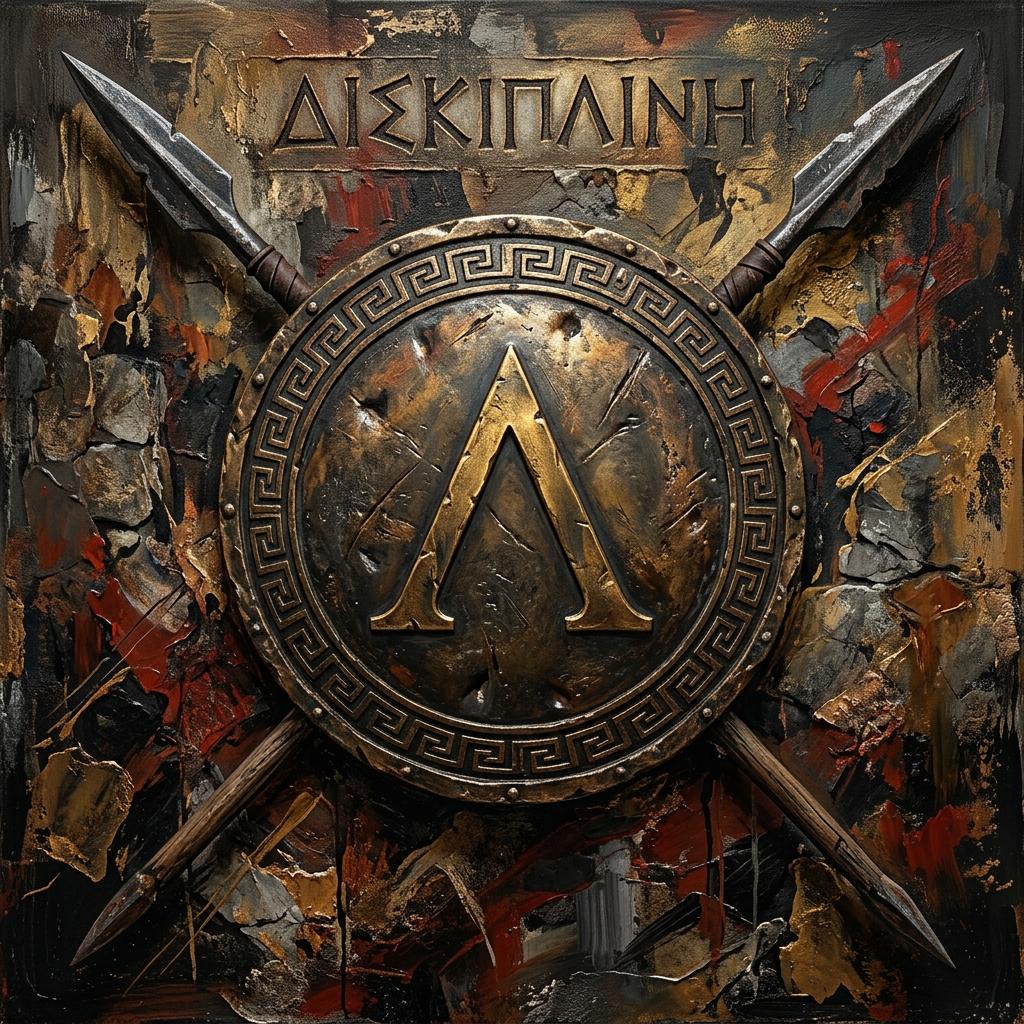
Lycurgus stands as one of the most enigmatic and influential figures of the ancient Greek world. Revered as the legendary lawgiver of Sparta, he is credited with transforming a turbulent city into one of the most disciplined and formidable societies in history.
Though historians debate whether he was a single historical individual or a composite figure shaped by tradition, his legacy—real or mythic—became the foundation of Spartan identity.
The Problem of History and Legend
Very little about Lycurgus can be confirmed with certainty. Ancient sources such as Herodotus, Xenophon, and Plutarch wrote about him centuries after he supposedly lived, placing his lifetime somewhere between the 9th and 7th centuries BCE.
Accounts of his life are filled with contradictions and mythic elements. Some say he was a royal guardian, others that he was a prince who voluntarily gave up power.
Many traditions describe him traveling widely—visiting Crete, Egypt, and even possibly Ionia—studying different systems of government before crafting Sparta’s unique constitution.
Whether man or myth, Lycurgus became the symbolic architect of the Spartan way of life.
The Great Rhetra
At the heart of Lycurgus’ reforms was what the Spartans called the Great Rhetra, a foundational constitutional framework said to have been delivered through the Oracle of Delphi.
According to tradition, Lycurgus consulted Apollo at Delphi and received divine sanction for his reforms. This connection to divine authority gave Spartan law a sacred character, strengthening obedience and unity.
The Great Rhetra established a mixed constitution combining elements of monarchy, oligarchy, and limited popular participation. Sparta retained its two hereditary kings, who led armies and performed religious functions.
Alongside them stood the Gerousia, a council of elders composed of men over sixty, and the Apella, an assembly of Spartan citizens. Later, five annually elected magistrates called Ephors gained significant power, overseeing kings and citizens alike.
This balance of power would influence later political thinkers, including Aristotle and even the framers of modern republican systems.

The Militarization of Society
Lycurgus’ most famous reform was transforming Spartan society into a disciplined military state. Every aspect of life was subordinated to the needs of the polis.
Boys entered the agoge at age seven, leaving their families to undergo rigorous state-supervised training.
The agoge emphasized endurance, obedience, combat skills, and communal loyalty. Spartan youths were deliberately subjected to hardship—scarce clothing, limited food, and strict discipline—to cultivate resilience.
Even adulthood was shaped by military obligation. Male citizens lived in communal barracks until age thirty and ate in public messes known as syssitia. Personal luxury was discouraged.
Coinage was reportedly replaced with heavy iron bars to limit wealth accumulation and foreign trade. The goal was equality among citizens and total devotion to Sparta.
Equality and Discipline
Lycurgus is also credited with redistributing land among Spartan citizens to reduce economic inequality. Though modern historians debate how fully this ideal was realized, the Spartan system sought to maintain a class of equal male citizens—Spartiates—who could devote themselves entirely to military service.
This equality, however, applied only to a narrow segment of the population. Beneath the Spartiates were the Perioikoi, free but politically subordinate inhabitants, and the Helots, a large population of state-owned serfs who farmed the land.
Spartan society depended heavily on Helot labor, and maintaining control over them required constant vigilance and military readiness.
Thus, the famed Spartan discipline was rooted partly in fear—fear of internal revolt as much as external enemies.
Women in Sparta
One striking feature of the Lycurgan system was the relative freedom granted to Spartan women compared to their counterparts in other Greek city-states.
Women were educated, trained physically, and encouraged to maintain strength to bear healthy children. They could own property and manage estates while men were engaged in military life.
While not politically equal, Spartan women occupied a uniquely visible and respected role in their society.

The Oath and the End
According to tradition, after establishing his laws, Lycurgus made the Spartans swear an oath to uphold his system until he returned from a final journey.
He then left Sparta and never came back, ensuring his laws would remain unchanged indefinitely. Some accounts say he starved himself to death; others claim he died abroad. In either case, his absence became permanent, and the Spartans honored their oath for generations.
This story reflects the Spartan reverence for stability and continuity. Unlike other Greek city-states prone to political upheaval, Sparta maintained a remarkably consistent constitutional structure for centuries.
Legacy
Lycurgus’ reforms shaped one of the most powerful military states of the ancient world. Sparta’s discipline and battlefield dominance—especially during the Persian Wars and the Peloponnesian War—owed much to the social system attributed to him.
Yet his legacy is complex. The same system that produced courage and unity also enforced rigidity and suppressed individuality. Sparta became admired for its strength and feared for its severity.
In the end, Lycurgus represents more than a historical figure. He embodies an idea: that law, discipline, and shared sacrifice can forge collective power.
Whether he was a real reformer or a symbolic founder, his name became inseparable from the Spartan ideal—unyielding, austere, and devoted entirely to the state.
Fortisetliber’s View
Lycurgus presents a paradox that continues to challenge modern minds. He built a society of extraordinary strength—yet one that tightly restrained individual freedom. At Fortis Liber, this tension invites reflection rather than simple praise or condemnation.
Sparta’s discipline was not accidental; it was cultivated through law, shared sacrifice, and a common vision of the good. Lycurgus understood that institutions shape character.
By reforming education, property, governance, and daily habits, he forged citizens who valued endurance over comfort and duty over self-interest. In this, there is a powerful lesson: civilizations are not sustained by wealth alone, but by moral formation.
Yet the Spartan model also warns us. A system designed for unity can become rigid. A culture centered on collective strength can suppress personal liberty. True fortitude must be anchored in wisdom, and true freedom must be disciplined by virtue.
The legacy of Lycurgus, therefore, asks us not whether we should imitate Sparta, but what principles we should recover: seriousness of purpose, civic responsibility, and the understanding that law and culture shape the soul of a people.
Strength without freedom becomes tyranny.
Freedom without strength becomes fragility.
The enduring question is how to cultivate both.
Leave a Reply