
The Achaemenid Empire was one of the most powerful and influential empires of the ancient world. Founded by Cyrus the Great in the mid-6th century BCE, it stretched from the Indus Valley in the east to the Aegean Sea in the west and from the Caucasus Mountains in the north to the Persian Gulf in the south.
Its rise marked a new era of governance, culture, and military organization, while its fall at the hands of Alexander the Great in the 4th century BCE changed the course of history.
The Rise of the Achaemenid Empire
Cyrus the Great (c. 600–530 BCE)
Cyrus II, known as Cyrus the Great, established the empire by uniting the Persian tribes and overthrowing the Median overlords.
He expanded Persia through conquest of the Lydian Kingdom in Anatolia and the Neo-Babylonian Empire, creating a vast, multiethnic empire.
Cyrus’s rule was notable for:
- Religious and cultural tolerance: Conquered peoples were often allowed to maintain customs and religions.
- Administrative innovation: Divided the empire into satrapies (provinces), each overseen by a governor (satrap).
- Infrastructure and communication: Built roads, such as the famous Royal Road, to facilitate trade and governance.
Cambyses II and Darius I
Cyrus’s son, Cambyses II, expanded the empire into Egypt, while Darius I (r. 522–486 BCE) strengthened the administrative system, reformed taxation, and consolidated the empire’s borders.
Darius also launched campaigns against Greece, leading to the Greco-Persian conflicts.
Under Darius, the empire reached its greatest territorial extent and became the political, economic, and cultural powerhouse of the ancient world.
The Strengths of the Empire
- Military Power: A professional army combining infantry, cavalry, and elite units like the Immortals.
- Administration: Efficient provincial governance with local autonomy under satraps.
- Infrastructure: Roads, canals, and postal systems to maintain control over vast distances.
- Cultural Integration: Respect for local customs reduced rebellions and fostered loyalty.
At its peak, the Achaemenid Empire was the largest the world had seen, rivaling any empire in history for its wealth, influence, and organization.

The Decline of the Achaemenid Empire
Despite its strength, the empire faced internal weaknesses that made it vulnerable:
- Overextension: Managing such a vast territory strained resources and communication.
- Succession disputes: Periodic conflicts for the throne created instability.
- Restlessness among subject peoples: Some regions, especially Greek cities in Asia Minor, chafed under Persian rule.
These factors left Persia exposed when a new and bold conqueror emerged in the west: Alexander the Great.
Alexander the Great and the End of Persia
Invasion of Asia Minor
In 334 BCE, Alexander crossed the Hellespont with a disciplined army of Macedonians and allies. He defeated Persian satraps at the Battle of the Granicus, securing a foothold in Asia Minor.
Crushing Persian Forces
- Battle of Issus (333 BCE): Alexander defeated Darius III, exposing the Persian king’s vulnerability.
- Siege of Tyre and Conquest of Egypt: Eliminated Persian strongholds, gained wealth, and consolidated power.
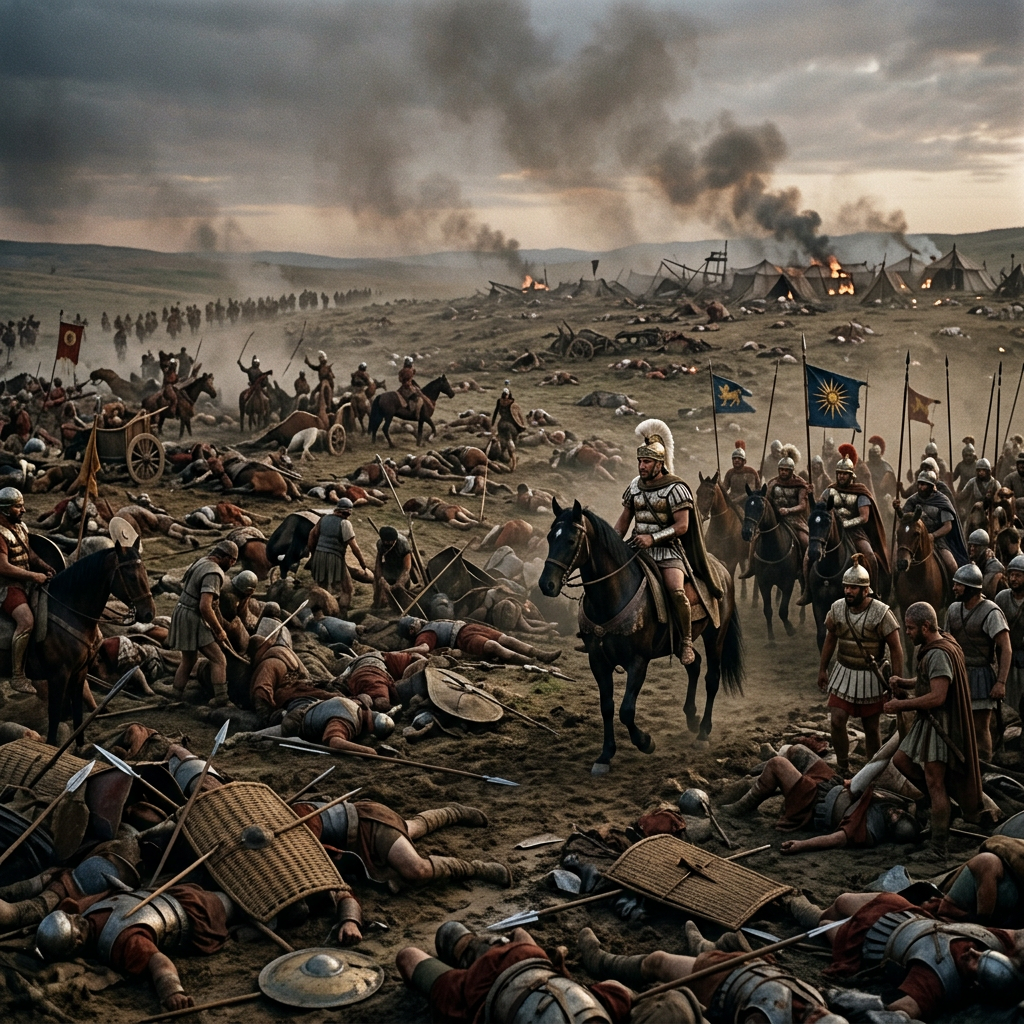
- Battle of Gaugamela (331 BCE): The decisive clash where Alexander’s tactics shattered the Persian army, forcing Darius to flee.
Fall of the Empire
After Gaugamela:
- Babylon, Susa, and Persepolis fell to Alexander.
- Darius III was eventually betrayed and killed by his own satraps.
- Alexander assumed control over the entire Persian realm, incorporating its administration and elites into his own empire.

Why the Achaemenid Empire Fell
- Overextended empire: Logistics and communication struggled across thousands of miles.
- Military rigidity: Persian tactics were outmatched by Alexander’s mobility, combined arms, and battlefield innovation.
- Leadership crisis: Darius III lacked the decisiveness and charisma to unify his forces against Alexander.
- Internal divisions: Satrapal autonomy and internal rivalries weakened the empire’s cohesion.
Legacy of the Achaemenid Empire
Though the empire fell to Alexander, its influence persisted:
- Administrative systems and infrastructure were adopted by successor empires.
- Cultural tolerance and governance models inspired later civilizations.
- Alexander’s blending of Greek and Persian customs (Hellenistic era) owed much to Achaemenid precedent.
In many ways, the Achaemenid Empire was the blueprint for empire-building, and its fall marked both the end of an era and the start of a new, Greek-influenced chapter in world history.
Conclusion:
The rise of the Achaemenid Empire showcased the power of strategic governance, cultural integration, and military innovation. Its fall, however, demonstrates that even the mightiest empire is vulnerable to bold leadership, adaptable tactics, and the momentum of history.
Alexander the Great didn’t just defeat Persia; he inherited and transformed its legacy, forever changing the course of the ancient world.

Fortisetliber’s View
The Achaemenid Empire rose under Cyrus the Great through bold conquests, smart administration, and cultural tolerance. At its peak, it stretched from the Indus to the Aegean and from the Caucasus to the Persian Gulf, becoming the largest and wealthiest empire of the ancient world.
Key Takeaways:
- Leadership Builds Empires: Cyrus and Darius I combined vision with strong administration, creating an efficient, resilient state.
- Strength Can Hide Vulnerabilities: Despite vast armies and infrastructure, overextension and internal divisions weakened Persia.
- Adaptability Determines Survival: Alexander the Great exploited these weaknesses with speed, tactical innovation, and decisive leadership.
- Integration Matters: Alexander preserved Persian administration and elites, showing that conquering is as much political as military.
Strategic Insight: The Achaemenid Empire teaches that empire-building requires more than size and wealth; it demands unity, competent leadership, and adaptability. Its fall shows that even the most powerful state is vulnerable to audacious, disciplined, and flexible opponents.
FortisLiber Lens: Persia’s story is a lesson in balance: ambition versus control, power versus cohesion. Alexander’s triumph wasn’t just military—it was the perfect storm of leadership, timing, and strategy exploiting an empire’s hidden cracks.
Leave a Reply