
Introduction
The Dionysian Mysteries were among the most fascinating and enigmatic religious traditions of the ancient Greek world.
Dedicated to Dionysus, the god of wine, fertility, ecstasy, theater, and transformation, these secret rites offered initiates a spiritual experience unlike anything found in conventional Greek religion.
While public worship focused on sacrifices and festivals, the Dionysian Mysteries promised personal revelation, liberation from societal constraints, and a deeper connection with the divine.
For centuries, scholars, historians, and spiritual seekers have been captivated by the mystery surrounding these sacred ceremonies.
Although much of their practice remains hidden due to the secrecy of initiates, surviving texts, archaeological discoveries, and ancient accounts provide valuable insights into one of antiquity’s most influential mystery cults.
In this article, we explore the origins, beliefs, rituals, symbolism, and lasting legacy of the Dionysian Mysteries.
Origins of the Dionysian Mysteries
The worship of Dionysus dates back to at least the Bronze Age. Evidence from Mycenaean tablets suggests that Dionysus was already venerated in Greece as early as the second millennium BCE. However, the mystery traditions associated with the god developed later and evolved over centuries.
Unlike many Olympian deities, Dionysus occupied a unique position in Greek mythology. He was both divine and deeply connected to human experience.
As the son of Zeus and the mortal Semele, Dionysus embodied the intersection between mortality and immortality. His myths often centered on themes of death, rebirth, madness, and transcendence.
The Dionysian Mysteries emerged from these mythological foundations. They were influenced by local fertility cults, ecstatic religious practices, and perhaps even Near Eastern spiritual traditions.
By the Classical and Hellenistic periods, Dionysian initiatory rites had spread throughout Greece and eventually across the Roman Empire.
Who Was Dionysus?
Understanding the Dionysian Mysteries requires understanding the deity at their center.
Dionysus was far more than the god of wine. He represented:
- Ecstasy and altered states of consciousness
- Fertility and the life force of nature
- The cycle of death and rebirth
- Creativity and artistic inspiration
- Liberation from social and psychological restraints
- Divine madness and spiritual transformation
In mythology, Dionysus frequently crossed boundaries. He moved between civilization and wilderness, life and death, human and divine. This liminal nature made him an ideal figure for mystery initiation, where participants symbolically crossed from ordinary existence into sacred awareness.

The Purpose of the Dionysian Mysteries
Like other ancient mystery religions, the Dionysian Mysteries offered initiates experiences that transcended ordinary religious practice.
The central goals likely included:
Spiritual Transformation
Participants sought a direct encounter with the divine. Through ritual, music, dance, and symbolic acts, initiates experienced a temporary dissolution of their everyday identity and a connection with a higher reality.
Union with Dionysus
Many scholars believe initiates aimed to become spiritually united with Dionysus. This union represented liberation from fear, suffering, and the limitations of ordinary human existence.
Preparation for the Afterlife
Ancient evidence suggests that mystery cults often promised a better fate after death. The Dionysian Mysteries may have offered initiates hope for immortality or spiritual renewal beyond the grave.
Liberation and Ecstasy
The Greek term “ekstasis,” from which the modern word ecstasy derives, literally means standing outside oneself. Dionysian rituals sought to induce this state, allowing participants to transcend normal consciousness and encounter the sacred directly.
Rituals and Ceremonies
Because initiates were sworn to secrecy, the exact details of Dionysian ceremonies remain uncertain. However, historical sources provide clues about the practices involved.
Sacred Processions
Many Dionysian festivals featured elaborate processions through cities and countryside. Participants carried sacred objects, wore ceremonial clothing, and celebrated the presence of the god.
These public events often served as a prelude to more private and secret initiatory rites.
Music and Dance
Music played a central role in Dionysian worship. Drums, flutes, cymbals, and rhythmic chanting created an atmosphere conducive to altered states of consciousness.
Dancing was equally important. Participants engaged in energetic, sometimes frenzied movements designed to break down ordinary awareness and facilitate spiritual ecstasy.
Symbolic Reenactments
Many mystery traditions involved reenacting sacred myths. Initiates may have participated in dramatic representations of Dionysus’s suffering, death, and rebirth.
These performances allowed worshippers to experience myth not as a story but as a transformative spiritual reality.
Wine as a Sacred Medium
Wine held profound symbolic significance within the Dionysian Mysteries. Rather than serving merely as an intoxicant, it represented the divine essence of Dionysus himself.
Ritual consumption of wine likely functioned as a sacramental act through which initiates communed with the god.
Initiation Ceremonies
Initiation marked the transition from ordinary observer to participant in the mysteries. Though details remain unknown, initiates probably underwent purification rituals, sacred instruction, and symbolic tests before being admitted to deeper levels of knowledge.

The Role of the Maenads
One of the most famous aspects of Dionysian worship involved the Maenads, female followers of Dionysus known for their ecstatic devotion.
Ancient literature often portrays Maenads dancing in mountains and forests while celebrating the god through music, ritual movement, and communal worship.
While some accounts describe extreme behavior, historians caution that many of these stories were likely exaggerated by outsiders who misunderstood the cult’s practices.
The Maenads symbolized freedom from societal constraints and embodied the transformative power associated with Dionysian spirituality.
Symbolism in the Dionysian Mysteries
The Dionysian Mysteries employed rich symbolic imagery that communicated profound spiritual truths.
The Vine
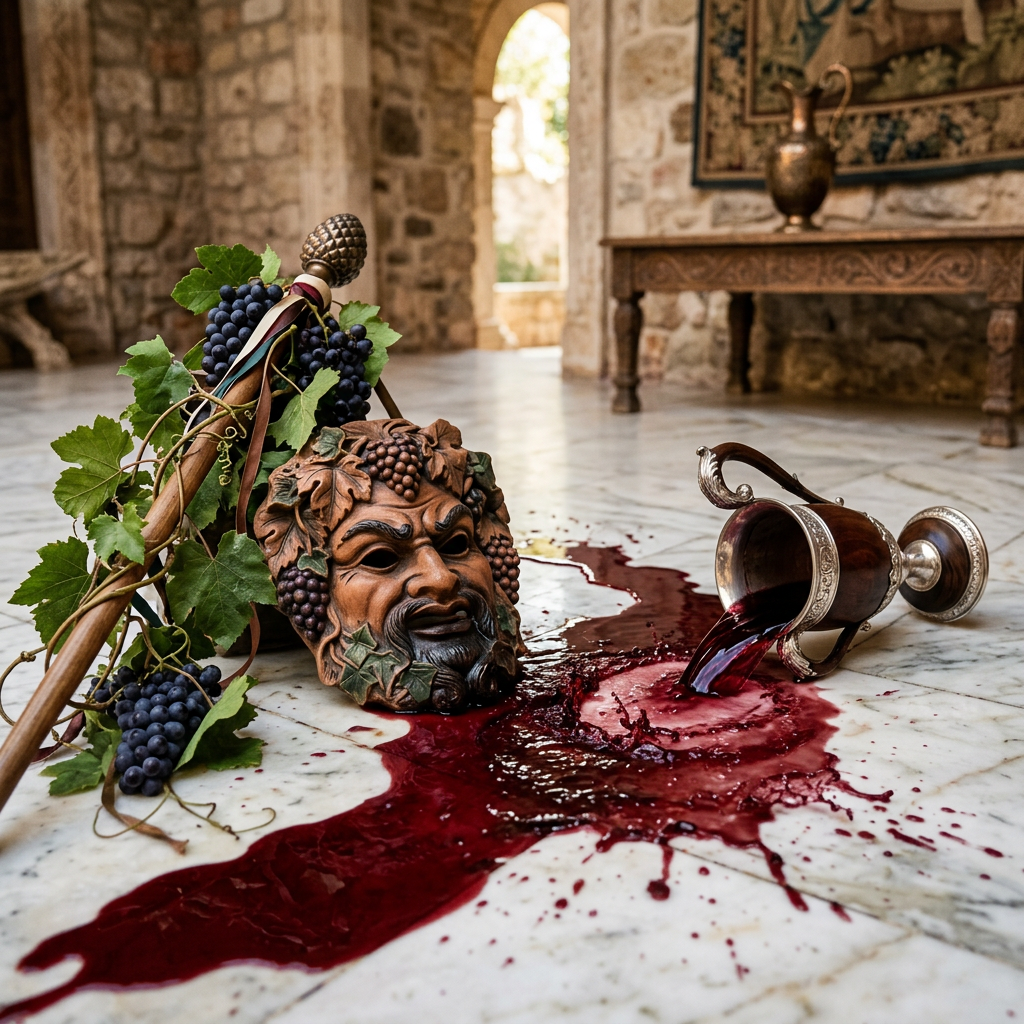
The grapevine represented life, growth, fertility, and transformation. Just as grapes become wine through a process of change, initiates underwent their own spiritual transformation.
The Bull
Dionysus was frequently associated with bulls, symbols of strength, vitality, and divine power. Some myths even depict the god assuming bovine form.
The Mask
Masks played a significant role in Dionysian rituals and Greek theater. They symbolized the fluid nature of identity and the possibility of transcending one’s ordinary self.
Death and Rebirth
Perhaps the most important theme in the Dionysian Mysteries was the cycle of death and rebirth. Initiates symbolically died to their old identity and emerged spiritually renewed.
This pattern reflected both the seasonal cycles of nature and the mythological experiences of Dionysus himself.
Dionysian Mysteries and Greek Theater
The connection between Dionysus and theater is one of the most enduring aspects of his legacy.
Ancient Greek drama developed directly from festivals dedicated to Dionysus. Tragedies and comedies were originally performed as part of religious celebrations honoring the god.
The theatrical experience mirrored key themes of the Dionysian Mysteries:
- Transformation through performance
- Exploration of hidden truths
- Emotional catharsis
- Temporary suspension of ordinary reality
Many scholars argue that Greek theater preserved aspects of Dionysian spirituality in a public and artistic form.

Comparison with Other Mystery Religions
The Dionysian Mysteries belonged to a broader tradition of ancient mystery cults.
Compared with the Eleusinian Mysteries, which focused on agricultural cycles and the goddess Demeter, Dionysian rites emphasized ecstasy, emotional intensity, and personal transformation.
Compared with the Orphic Mysteries, Dionysian traditions were often more communal and experiential, though the two movements shared important themes involving the soul and the afterlife.
Despite their differences, all mystery religions sought to provide direct spiritual experiences unavailable through ordinary civic worship.
The Spread of Dionysian Worship
During the Hellenistic era and later under Roman rule, Dionysian worship spread far beyond Greece.
The Romans identified Dionysus with Bacchus, and his mysteries became known as the Bacchic Mysteries. These rites attracted followers across Italy, North Africa, Asia Minor, and other regions of the empire.
The popularity of Bacchic worship occasionally alarmed authorities. In 186 BCE, the Roman Senate famously attempted to restrict Bacchic gatherings due to concerns about their influence and secrecy.
Despite official opposition, Dionysian traditions continued to flourish for centuries.
Legacy and Influence
Although the ancient mystery cults eventually disappeared, the influence of the Dionysian Mysteries remains visible in Western culture.
Psychology
The philosopher Friedrich Nietzsche famously contrasted the Dionysian and Apollonian aspects of human nature. The Dionysian represented passion, instinct, creativity, and transcendence.
Modern psychology continues to explore many themes associated with Dionysian spirituality, including altered states of consciousness and personal transformation.
Art and Literature
Artists, poets, and writers have repeatedly drawn inspiration from Dionysian imagery. Themes of ecstasy, liberation, and creative inspiration continue to shape artistic expression today.
Spirituality
Contemporary spiritual movements often revisit concepts central to the Dionysian Mysteries, including ritual experience, connection with nature, symbolic rebirth, and transcendence of ordinary consciousness.

Conclusion
The Dionysian Mysteries stand among the most intriguing religious traditions of the ancient world.
Rooted in the worship of Dionysus, these secret rites offered participants a path toward spiritual transformation, divine communion, and personal liberation.
Though much of their practice remains hidden by history, their enduring themes—ecstasy, rebirth, creativity, and transcendence—continue to resonate with modern audiences.
The mysteries remind us that ancient spirituality was not merely about belief but about direct experience, transformation, and the search for deeper meaning.
Today, the Dionysian Mysteries remain a powerful symbol of humanity’s timeless desire to cross the boundaries of ordinary existence and encounter the sacred in its most transformative form.
Fortisetliber’s View
The Dionysian Mysteries are often misunderstood as mere celebrations of wine, ecstasy, and uninhibited emotion. Yet beneath their symbolic imagery lies a deeper lesson that resonates strongly with the principles of Fortis et Liber—Strong and Free.
At their core, the Mysteries challenged individuals to confront the limitations imposed by society, fear, and the ego.
Dionysus was not simply a god of intoxication but a force of transformation. His followers sought liberation from illusion and the courage to experience life in its fullest intensity. In this sense, the Dionysian path was not one of chaos for its own sake but a journey toward authentic freedom.
From a Fortis et Liber perspective, true freedom cannot exist without strength. The initiate entering the Dionysian Mysteries was required to face uncertainty, surrender false identities, and embrace personal transformation. Such a process demands inner resilience. Weakness clings to convention and fear; strength allows one to venture into the unknown.
Likewise, the Mysteries remind us that liberty is not mere license. Freedom is not the absence of discipline but the mastery of oneself.
Dionysian symbolism teaches that human beings must balance reason with passion, order with creativity, and structure with spontaneity. A person who suppresses instinct becomes rigid, while one who is ruled by impulse becomes enslaved. The wise individual integrates both forces.
The enduring relevance of the Dionysian Mysteries lies in their call to awaken. They urge us to break free from mental chains, question inherited assumptions, and engage directly with the profound mysteries of existence.
In a world increasingly defined by distraction and conformity, this message remains remarkably powerful.
To be Fortis et Liber is to embody the highest lesson of the Dionysian tradition: to possess the strength to face truth and the freedom to live according to it.
Leave a Reply