
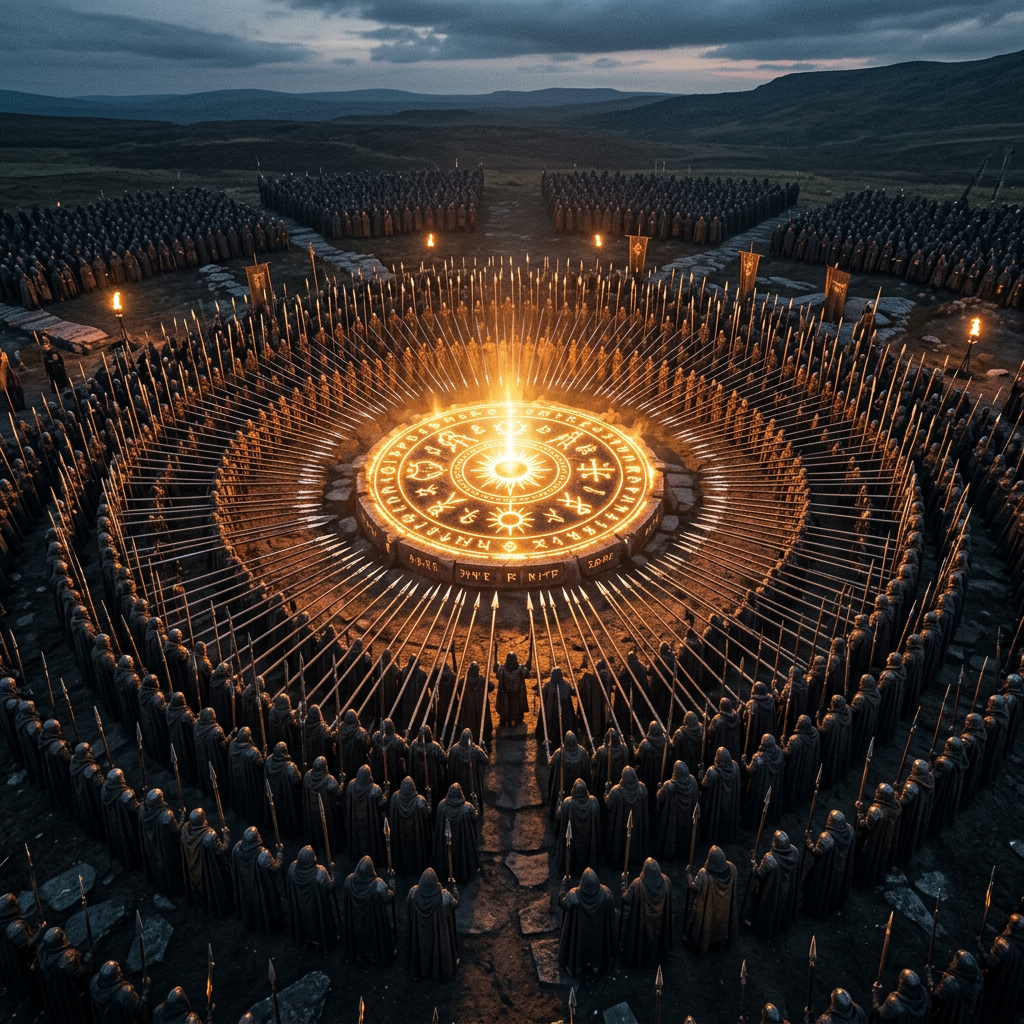
The Persian Immortals were one of the most famous elite military units of the ancient world. Serving under the Achaemenid Empire, they combined discipline, prestige, and psychological impact to become a cornerstone of Persian imperial power.
Their reputation spread widely through Greek historical accounts, where they were described as an almost unstoppable force.
Who Were the Immortals?
The Immortals were a standing elite infantry unit of approximately 10,000 soldiers. Greek historians, particularly Herodotus, gave them the name “Immortals” because their numbers were always kept constant: whenever a soldier was killed, wounded, or ill, he was immediately replaced so the unit never fell below full strength.
Modern historians believe their Persian name may have been something closer to Anûšiya or Anûšiya-“companions”, but “Immortals” remains the widely used term.
They served as:
- Elite infantry
- Imperial guards
- Shock troops in major campaigns
- A symbol of royal authority
Role in the Achaemenid Military System
The Immortals were part of a highly organized imperial army that drew soldiers from across the vast Persian Empire, including regions in Asia Minor, Mesopotamia, and Central Asia.
They were especially important in major military campaigns led by rulers such as Darius I and Xerxes I.
While much of the Persian army consisted of levied troops from subject peoples, the Immortals represented a permanent professional force, loyal directly to the king.
Weapons and Equipment
Contrary to the heavily armored Greek hoplites, the Immortals favored a balance of protection, mobility, and versatility.
Their typical equipment included:
Weapons
- Short spears for thrusting in formation
- Bows for ranged combat
- Daggers or short swords for close fighting
Defensive Gear
- Wicker or wooden shields reinforced with leather
- Light armor, often scale or quilted fabric
- Cloth robes or tunics adapted for mobility
This combination allowed them to fight effectively at both range and close quarters.

Appearance and Symbolism
Ancient descriptions emphasize the striking appearance of the Immortals. They often wore:
- Elaborate robes
- Gold or decorated accessories for officers
- Distinctive headgear such as soft caps (similar to Persian tiaras)
One of the most iconic depictions comes from the reliefs at Persepolis, the ceremonial capital of the empire. There, Immortals are shown marching in perfect order, carrying spears and bows, symbolizing imperial unity and control.
Battle Role and Tactics
The Immortals were not just ceremonial guards—they were deployed in critical moments of battle.
Their roles included:
- Holding key positions in battle lines
- Supporting weaker sections of the army
- Acting as elite reserve forces
- Guarding the king during campaigns
During large-scale invasions, such as the Persian expeditions into Greece, they formed part of the central force commanded by Xerxes I.
Although Persian warfare relied heavily on missile troops and cavalry, the Immortals provided stability in close combat situations.
The Immortals in the Greco-Persian Wars
The Immortals became especially famous in Greek accounts of the Greco-Persian Wars, including conflicts such as the battles of Thermopylae and Salamis.
Greek writers often portrayed them as fearsome, disciplined warriors who embodied the power of the Persian Empire. While Greek hoplites ultimately proved highly effective in close formation combat, the Immortals remained one of the most respected enemy forces they encountered.
Their presence reinforced the image of Persia as a vast and highly organized empire capable of mobilizing elite troops alongside massive multinational armies.
Legacy of the Immortals
The Immortals remain one of history’s most enduring military symbols. Their legacy is shaped as much by historical reality as by Greek storytelling, but their importance within the Achaemenid system is clear.
They represent:
- The concept of a permanent elite guard
- Early forms of professional standing infantry
- The organizational strength of the Persian Empire
Even today, the Immortals are remembered as a symbol of imperial discipline and the military sophistication of ancient Persia, standing alongside hoplites and Roman legions in the broader history of ancient warfare.

Fortisetliber’s View
From the Fortis Liber perspective, the Persian Immortals exemplify the timeless values of discipline, loyalty, and unwavering duty.
These elite soldiers were more than a military unit—they were the living embodiment of the empire’s strength and the king’s authority.
Known as the “Immortals” because their numbers never fell below ten thousand, they remind us that true power lies not in individual might alone, but in the seamless coordination of a committed group.
Each soldier’s role was vital; every replacement kept the unit whole, symbolizing the enduring strength of collective effort.
Equipped with spears, bows, and light armor, they combined mobility with resilience, prepared for both close and ranged combat. Yet their greatest weapon was their unity—the capacity to act as one under a disciplined command, maintaining cohesion even amid the chaos of battle.
The Immortals teach a lesson that transcends warfare: lasting achievement requires steadfast loyalty, discipline, and the recognition that the strength of the many can far surpass the power of the individual.
In their example, Fortis Liber finds a timeless model of courage in service, duty, and collective perseverance.
Leave a Reply