
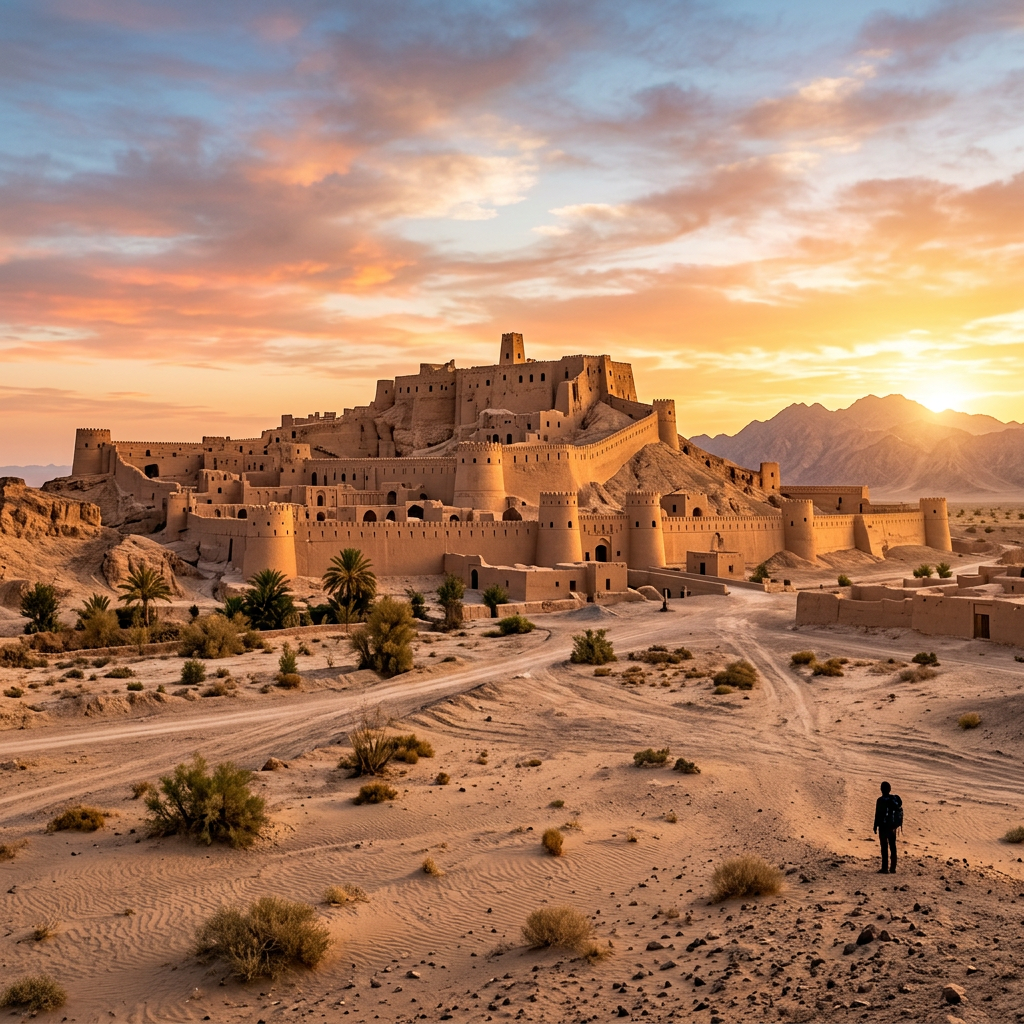
Introduction to Bam Citadel
The Bam Citadel, known locally as Arg-e Bam, is one of the most extraordinary surviving examples of a medieval mud-brick city in the world. Located in southeastern Iran, this UNESCO World Heritage Site stands as a powerful symbol of Persian engineering, desert life, and historical trade culture along the ancient Silk Road.
Situated near the city of Bam, Iran, the citadel is often described as the largest adobe structure in the world. Despite suffering severe damage in the devastating 2003 earthquake, Arg-e Bam remains a key cultural landmark that attracts historians, archaeologists, and travelers from around the globe.
Arg-e Bam is not just an ancient fortress—it is a living story of resilience, architecture, and Persian civilization.
Historical Background of Bam Citadel
The origins of Bam Citadel date back more than 2,000 years, with some evidence suggesting early settlement during the Achaemenid era (6th–4th century BCE). However, most of the visible structures today were developed between the 7th and 11th centuries, during the Islamic Golden Age.
A Strategic Silk Road Location
Bam was an important stop along the Silk Road, the ancient trade network connecting China, India, the Middle East, and Europe. Its location in the desert made it a natural hub for caravans, traders, and travelers seeking rest and protection.
The citadel functioned as:
- A military fortress for regional defense
- A residential city for nobles and citizens
- A commercial hub for Silk Road trade
- A political center for local governance
Decline and Abandonment
By the 18th century, Bam Citadel gradually lost its importance due to changing trade routes and political instability. Over time, much of the population moved away, leaving the citadel partially abandoned but still historically intact until modern times.
Architecture of Arg-e Bam: A Masterpiece of Mud-Brick Engineering
One of the most fascinating aspects of Bam Citadel is its construction. The entire complex was built using adobe (sun-dried mud bricks) combined with mud mortar and straw.
Key Architectural Features
The citadel is divided into two main sections:
1. The Governmental Area (Upper Citadel)
This elevated section includes:
- The governor’s residence
- Military barracks
- Watchtowers
- Defensive walls
It was the political and military heart of the city, designed for control and protection.
2. The Residential Town (Lower Citadel)
This area includes:
- Houses for citizens
- Bazaar (marketplace)
- Mosque
- Public bathhouses (hammams)
The layout reflects a highly organized urban design that supported thousands of residents.
Climate-Adaptive Design
The architecture of Arg-e Bam is a perfect example of desert adaptation:
- Thick mud walls provide insulation against heat and cold
- Wind towers (badgirs) help circulate air
- Narrow streets create natural shading
- Compact urban design reduces exposure to harsh desert winds
This sustainable design allowed life to thrive in one of the harshest climates in the world.

The 2003 Earthquake: A Tragic Turning Point
On December 26, 2003, a catastrophic earthquake struck southeastern Iran, with Bam at its epicenter. The disaster had a devastating impact on both the city and the citadel.
Damage to Bam Citadel
- Up to 80–90% of Arg-e Bam was destroyed
- Many historical structures collapsed completely
- Thousands of residents lost their lives in the region
- The site was left in ruins, shocking the global heritage community
This tragedy marked one of the most significant losses of cultural heritage in modern history.
UNESCO World Heritage Status and Restoration Efforts
Despite the destruction, the global community quickly mobilized to preserve and restore Bam Citadel.
UNESCO Recognition
The site was already inscribed as a UNESCO World Heritage Site in 2004, shortly after the earthquake, and simultaneously placed on the List of World Heritage in Danger.
Restoration Projects
Restoration efforts have involved:
- Iranian cultural heritage organizations
- UNESCO experts
- International archaeologists and architects
Key goals include:
- Rebuilding collapsed structures using traditional techniques
- Preserving remaining original materials
- Reinforcing structural stability
- Documenting historical layouts with advanced technology
Although reconstruction is ongoing, parts of Arg-e Bam have been carefully restored to reflect its former grandeur.
Cultural and Historical Significance
Bam Citadel is more than just an ancient fortress—it represents the evolution of Persian urban civilization.
Symbol of Persian Engineering
The citadel demonstrates:
- Advanced understanding of climate-responsive architecture
- Sophisticated urban planning
- Strong defensive engineering strategies
Cultural Identity
For Iranians, Bam Citadel is a symbol of resilience and national heritage. Its survival—despite natural disaster—represents the enduring spirit of Persian history.
Academic Importance
Historians and archaeologists study Arg-e Bam to understand:
- Pre-modern desert city planning
- Silk Road commerce systems
- Ancient Persian social organization
- Mud-brick construction techniques

Tourism at Bam Citadel Today
Although still under restoration, Bam Citadel is open to visitors and remains one of Iran’s most important tourist attractions.
What Visitors Can See
Tourists can explore:
- Restored sections of the citadel walls
- Watchtowers with panoramic desert views
- The ancient bazaar area
- Remnants of residential districts
- Surrounding palm groves of Bam oasis
Best Time to Visit
The ideal time to visit is:
- Autumn (September–November)
- Spring (March–May)
During these seasons, temperatures are milder and more suitable for exploration.
Travel Tips
- Wear light, breathable clothing suitable for desert climate
- Bring sun protection (hat, sunscreen, sunglasses)
- Hire a local guide for historical context
- Respect restoration areas and restricted zones
Bam Citadel in Modern Iranian Tourism
Today, Arg-e Bam plays a major role in promoting cultural tourism in southeastern Iran. It attracts:
- Archaeology enthusiasts
- History researchers
- Cultural travelers
- UNESCO heritage tourists
The surrounding region of Bam, Iran also offers agricultural landscapes, particularly famous for its date palms and citrus farms, making it a unique blend of desert and oasis life.
Frequently Asked Questions (FAQ)
1. Where is Bam Citadel located?
Bam Citadel is located near Bam city in Kerman Province, southeastern Iran.
2. How old is Arg-e Bam?
Parts of the citadel date back over 2,000 years, with major development during the early Islamic period.
3. Why is Bam Citadel famous?
It is famous for being the largest adobe structure in the world and a major Silk Road fortress city.
4. What happened to Bam Citadel in 2003?
A powerful earthquake destroyed most of the structure and caused widespread loss of life.
5. Is Bam Citadel rebuilt?
Yes, restoration efforts are ongoing under UNESCO supervision, but reconstruction is still incomplete.

Conclusion
The Bam Citadel, or Arg-e Bam, stands as one of the most remarkable examples of ancient desert architecture and Persian urban planning. Despite the devastation of the 2003 earthquake, it continues to symbolize resilience, cultural heritage, and historical depth.
As restoration continues, this UNESCO World Heritage Site remains a must-visit destination for anyone interested in ancient civilizations, Silk Road history, and architectural marvels.
Whether you are a traveler, historian, or SEO researcher, the story of Bam Citadel offers timeless value and global significance.
Fortisetliber’s View
From a FortisLiber perspective, Bam Citadel is more than an archaeological site—it is a study in endurance, silence, and reconstruction. Where many ancient cities disappeared completely under time and climate, Arg-e Bam remains partially standing, like a memory that refuses to fade.
Built from sun-dried earth in the heart of the desert near Bam, Iran, the citadel reflects a philosophy that FortisLiber often emphasizes: strength is not only found in stone or steel, but in adaptation. Its mud-brick walls were not designed to defy nature, but to work with it—breathing with the desert heat, shielding life within, and shaping a self-sustaining urban ecosystem.
The earthquake of 2003 shattered much of what had already survived centuries. Yet, in FortisLiber interpretation, destruction did not end the citadel’s story; it transformed its meaning. The ruins became a dialogue between past and present, forcing a question that defines all enduring heritage: what do we choose to rebuild, and why?
Today, restoration efforts are not just architectural—they are philosophical. Each reconstructed wall is an attempt to reconnect with an ancient worldview where city, climate, and community were tightly interwoven. Bam Citadel thus stands in a suspended state: not fully ancient, not fully modern, but something in between—a living fragment of history under careful reconstruction.
In FortisLiber view, Arg-e Bam is ultimately a reminder that resilience is not the absence of collapse, but the persistence of identity after it.
Leave a Reply