
Introduction
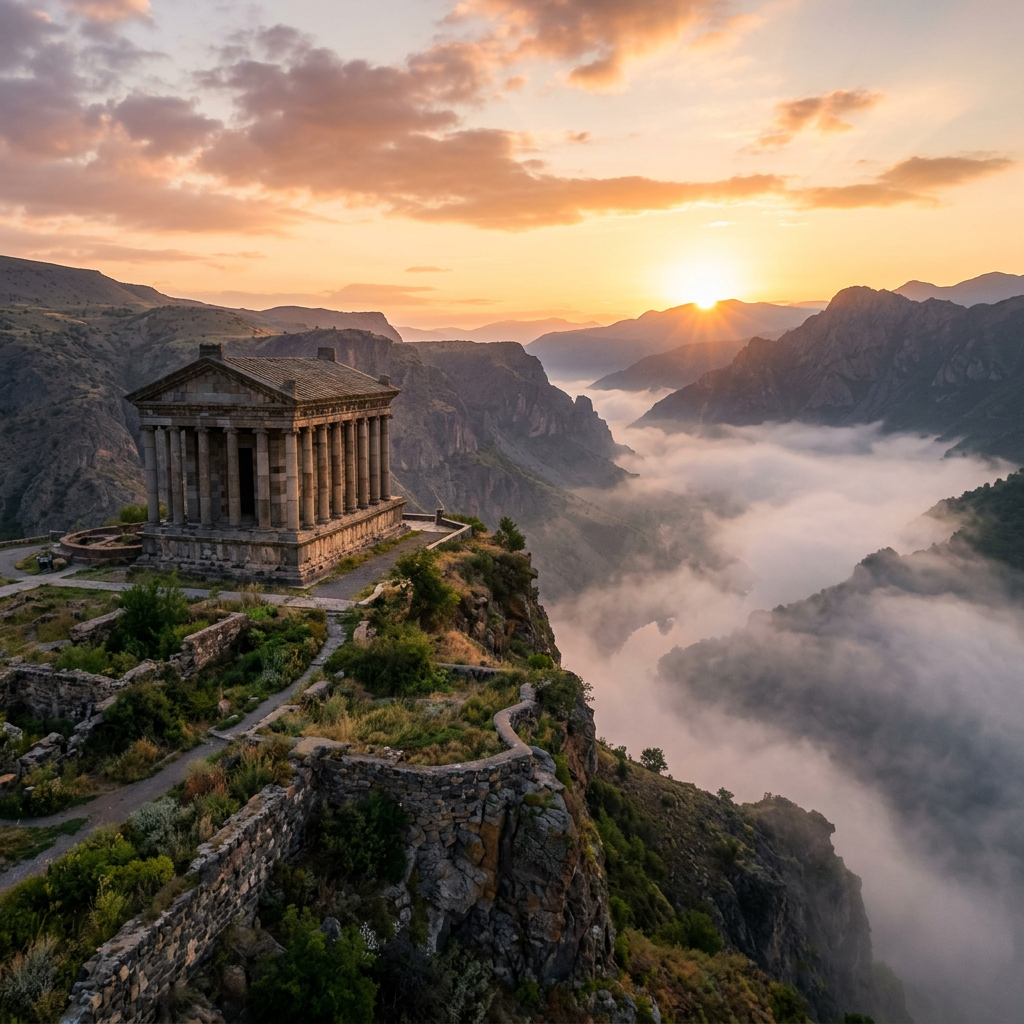
Standing proudly on the edge of a dramatic basalt gorge in the Kotayk Province of Armenia, the Garni Temple is one of the country’s most remarkable historical landmarks and among the finest surviving examples of Greco-Roman architecture outside the Mediterranean world. Often described as the last standing pagan temple in Armenia and the only surviving Greco-Roman colonnaded temple in the former Soviet Union, Garni represents a unique fusion of Hellenistic design, Armenian culture, and ancient religious traditions.
Constructed during the 1st century AD, the temple has witnessed the rise and fall of kingdoms, the spread of Christianity, devastating earthquakes, and meticulous modern restoration. Today, Garni Temple is one of Armenia’s most visited attractions, captivating historians, archaeologists, architects, and travelers alike.
This article explores the history, architecture, religious significance, and enduring legacy of Garni Temple while explaining why it remains one of the greatest treasures of Armenia.
The History of Garni Temple
The Kingdom of Armenia in Antiquity
Long before Christianity became Armenia’s official religion, the region was home to a rich mixture of local traditions and foreign cultural influences.
During the reign of the Arsacid Dynasty, Armenia occupied a strategic position between the mighty Roman Empire and the Parthian Empire. As a crossroads of civilizations, Armenia absorbed elements of Greek, Persian, and Roman culture while maintaining its own distinctive identity.
This multicultural environment provided the foundation for the construction of Garni Temple, a monument that reflects both Armenian traditions and classical architectural ideals.
Construction of the Temple
Most historians believe Garni Temple was built around 77 AD during the reign of King Tiridates I of Armenia.
An inscription discovered in Greek attributes the construction to the king, although scholars continue to debate the temple’s precise original purpose.
The prevailing theory suggests that it was dedicated to Mihr, the Armenian sun god associated with light, justice, and divine power. Mihr shared many characteristics with the Iranian deity Mithra, reflecting the close cultural connections between Armenia and Persia.
Rather than simply copying Roman architecture, Garni blended classical aesthetics with local craftsmanship, creating a monument unlike any other in the Caucasus.
Why Garni Temple Survived
One of history’s greatest mysteries is why Garni Temple survived while nearly every other pagan sanctuary in Armenia disappeared.
In 301 AD, Armenia became the first nation in the world to officially adopt Christianity under King Tiridates III and the guidance of Gregory the Illuminator.
As Christianity spread, pagan temples across the country were systematically destroyed or converted into churches.
Garni, however, escaped destruction.
Many historians believe the temple survived because it was transformed into a royal summer residence rather than continuing as an active religious sanctuary. This practical reuse likely saved it from the fate that befell other pagan monuments.
The Architecture of Garni Temple


Garni Temple is an outstanding example of Hellenistic architecture adapted to the Armenian landscape.
Its elegant proportions immediately remind visitors of classical Greek and Roman temples.
Main Architectural Features
The temple measures approximately:
- 24 meters long
- 11.5 meters wide
- Nearly 9 meters high
Its most recognizable feature is the impressive colonnade consisting of 24 Ionic columns.
These columns symbolize:
- Stability
- Harmony
- Classical beauty
The structure stands upon a high basalt podium accessed by a broad ceremonial staircase.
Building Materials
The temple was constructed primarily from locally quarried basalt, one of Armenia’s most abundant volcanic stones.
Despite basalt’s hardness, Armenian craftsmen produced remarkably refined carvings that remain visible today.
Decorative elements include:
- Floral motifs
- Geometric ornamentation
- Classical moldings
- Sculpted capitals
The precision of the stonework reflects the extraordinary skill of ancient Armenian builders.
Religious Significance
Although the temple’s exact function remains debated, most scholars agree that Garni served as an important pagan sanctuary.
The likely dedication to Mihr connects Garni with ancient Armenian religious beliefs centered on:
- The sun
- Fire
- Justice
- Royal authority
Religious ceremonies probably included:
- Animal sacrifices
- Ritual offerings
- Seasonal festivals
- Royal ceremonies
The temple also symbolized the divine legitimacy of Armenia’s rulers.
Garni Fortress
The temple was not an isolated monument.
It formed part of the extensive Garni Fortress, strategically positioned on cliffs overlooking the spectacular Azat River Gorge.
Natural defenses protected the complex on three sides, while massive defensive walls secured the remaining approaches.
The fortress served as:
- Royal residence
- Military stronghold
- Administrative center
- Religious complex
This strategic location allowed Armenian kings to control important routes through the surrounding mountains.

The Roman Influence
Garni Temple clearly reflects Rome’s political and cultural influence during the first century AD.
King Tiridates I maintained close diplomatic relations with Emperor Nero, who formally recognized him as King of Armenia.
Following Tiridates’ visit to Rome, Armenian architecture increasingly incorporated classical elements while preserving native artistic traditions.
Garni stands as one of the finest examples of this cultural exchange.
The Earthquake of 1679
For more than 1,500 years, Garni Temple stood largely intact.
Disaster struck in 1679, when a devastating earthquake destroyed much of the structure.
Columns collapsed.
Walls crumbled.
Stone blocks scattered across the hillside.
For centuries, the magnificent temple remained in ruins, admired only by travelers, scholars, and local residents.
The fallen stones, however, remained remarkably well preserved, making future reconstruction possible.
Restoration of the Temple
One of the greatest archaeological achievements in Armenia occurred between 1969 and 1975.
Using thousands of original stones recovered from the site, Armenian specialists reconstructed Garni Temple through a method known as anastylosis.
This technique carefully returns original architectural elements to their original positions while using modern materials only where necessary for structural stability.
The restoration transformed Garni into one of the world’s finest examples of archaeological reconstruction.
The Symphony of Stones


Just below the temple lies one of Armenia’s most extraordinary natural attractions—the Symphony of Stones.
This geological wonder consists of enormous hexagonal basalt columns formed by ancient volcanic activity.
The perfectly shaped formations resemble giant organ pipes cascading down the cliffs.
Together, Garni Temple and the Symphony of Stones create one of Armenia’s most breathtaking historical and natural landscapes.
Archaeological Discoveries
Excavations around Garni have uncovered numerous important finds, including:
- Roman baths
- Mosaic floors
- Royal palace remains
- Fortification walls
- Ancient inscriptions
- Ceremonial buildings
One of the most famous discoveries is a beautifully preserved Roman bath featuring an elaborate mosaic floor bearing a Greek inscription that reads:
“We worked without receiving anything.”
These discoveries reveal that Garni functioned as far more than a single temple—it was a sophisticated royal complex.
Garni Temple in Modern Armenia
Today, Garni Temple is one of Armenia’s most treasured historical monuments and among the country’s most visited tourist attractions. Its exceptional preservation, dramatic location, and unique architectural style have made it a national symbol of Armenia’s ancient heritage.
Unlike many archaeological sites that are appreciated primarily by historians, Garni appeals to a broad audience. History enthusiasts admire its connection to the ancient Kingdom of Armenia, architects study its remarkable classical proportions, and travelers are captivated by its breathtaking setting above the Azat River Gorge.
Throughout the year, the temple hosts cultural events, historical reenactments, concerts, and traditional celebrations that highlight Armenia’s rich cultural identity.
Garni Temple and Armenian Identity
Few monuments illustrate Armenia’s historical journey as vividly as Garni Temple.
It represents a civilization that existed long before Christianity transformed the country. Rather than conflicting with Armenia’s Christian heritage, Garni complements it by reminding visitors of the nation’s deep and diverse cultural roots.
The temple symbolizes:
- The endurance of Armenian civilization
- The meeting of Eastern and Western cultures
- The sophistication of ancient Armenian architecture
- The resilience of historical monuments through centuries of conflict and natural disasters
For Armenians, Garni is not merely an archaeological site—it is a powerful connection to the country’s ancient past.

A Paradise for Photographers
Garni Temple is widely regarded as one of the most photogenic locations in the Caucasus.
The combination of classical architecture, rugged volcanic cliffs, and sweeping mountain scenery creates spectacular photographic opportunities throughout the day.
Popular photography subjects include:
- The temple framed by the surrounding mountains
- Sunrise illuminating the Ionic columns
- Sunset over the Azat Gorge
- Panoramic views from the fortress walls
- The nearby Symphony of Stones
During autumn, the colorful foliage surrounding the gorge adds another layer of beauty to the landscape.
Visiting Garni Temple
Garni Temple is located approximately 30 kilometers (19 miles) east of Yerevan, making it one of the easiest historical sites to visit on a day trip from the Armenian capital.
Visitors can reach the site by:
- Rental car
- Organized tours
- Taxi
- Local transportation
The journey passes through scenic mountain landscapes and traditional Armenian villages, making the trip enjoyable in its own right.
Best Time to Visit
Garni Temple can be visited throughout the year, but each season offers a unique experience.
Spring
Spring brings mild temperatures and blooming wildflowers that enhance the surrounding landscape.
Summer
Summer provides clear skies and long daylight hours, making it ideal for sightseeing and photography.
Autumn
Autumn is perhaps the most picturesque season, with vibrant foliage covering the hillsides around the temple.
Winter
Snow transforms Garni into a striking scene where the golden basalt stones contrast beautifully with the white landscape.

Nearby Attractions
A visit to Garni Temple is often combined with several nearby landmarks.
Geghard Monastery
Located only a short drive away, the Geghard Monastery is one of Armenia’s most important medieval religious sites and a UNESCO World Heritage Site. Carved directly into the surrounding rock, it offers a fascinating contrast to the classical architecture of Garni Temple.
Symphony of Stones
The spectacular basalt formations of the Symphony of Stones remain one of Armenia’s greatest geological wonders and are easily accessible from the temple.
Azat River Gorge
Nature lovers can explore hiking trails and scenic viewpoints overlooking the dramatic canyon that surrounds the Garni complex.
UNESCO Recognition
Although Garni Temple itself is not currently listed as an individual UNESCO World Heritage Site, it forms part of one of Armenia’s most significant cultural landscapes and is frequently visited alongside the nearby UNESCO-listed Geghard Monastery.
Its outstanding architectural value, historical importance, and exceptional preservation have made Garni one of the country’s most internationally recognized archaeological monuments.
Why Garni Temple Is So Important
Several factors distinguish Garni from other ancient monuments.
The Last Pagan Temple in Armenia
Garni is the only surviving Greco-Roman pagan temple in Armenia and one of the few such structures preserved anywhere in the former Soviet Union.
Architectural Uniqueness
Its harmonious blend of Hellenistic design and Armenian craftsmanship makes it unlike any other monument in the Caucasus.
Historical Continuity
The temple reflects more than two thousand years of Armenian history, from paganism to Christianity and from antiquity to the modern republic.
Outstanding Restoration
The successful reconstruction of Garni Temple remains one of the finest examples of archaeological conservation in the world.

Frequently Asked Questions (FAQ)
What is Garni Temple?
Garni Temple is a first-century AD pagan temple located in Armenia. It is the country’s only surviving Greco-Roman colonnaded temple and one of its most important historical landmarks.
Who built Garni Temple?
Most historians attribute its construction to King Tiridates I of Armenia around 77 AD.
Which god was the temple dedicated to?
The temple is widely believed to have been dedicated to Mihr, the ancient Armenian god associated with the sun, light, and justice.
Why did Garni Temple survive?
Unlike other pagan temples in Armenia, Garni appears to have been converted into a royal residence after Christianity became the state religion, allowing it to escape destruction.
Was Garni Temple destroyed?
Yes. A devastating earthquake in 1679 reduced the temple to ruins. It was carefully reconstructed between 1969 and 1975 using many of the original stones.
Is Garni Temple worth visiting?
Absolutely. Garni Temple offers a unique combination of ancient history, impressive architecture, spectacular landscapes, and easy access from Yerevan, making it one of Armenia’s premier tourist attractions.
Conclusion
The Garni Temple is far more than an ancient ruin—it is a living testament to Armenia’s remarkable cultural heritage. Rising above the dramatic cliffs of the Azat River Gorge, it tells the story of a kingdom shaped by Greek, Roman, Persian, and native Armenian influences, preserving a chapter of history that survived religious transformation, natural disaster, and the passage of nearly two thousand years.
Its graceful Ionic columns, commanding position within the Garni Fortress, and proximity to the breathtaking Symphony of Stones create an unforgettable experience for every visitor. As the last standing pagan temple in Armenia and the finest example of Greco-Roman architecture in the Caucasus, Garni occupies a unique place in the history of the ancient world.
Whether you are passionate about archaeology, architecture, ancient religions, or simply discovering extraordinary destinations, Garni Temple offers an inspiring journey into one of the oldest civilizations on Earth. It remains a symbol of endurance, cultural exchange, and artistic achievement—proof that the legacy of the ancient world continues to shape our understanding of history today.
Fortisetliber’s View
Perched dramatically above the spectacular Azat River Gorge, the Garni Temple is one of Armenia’s most iconic historical landmarks and the only surviving Greco-Roman colonnaded temple in the Caucasus. Built during the 1st century AD, most likely under the reign of King Tiridates I, the temple stands as a remarkable symbol of Armenia’s pagan past before the nation became the world’s first to adopt Christianity as its official religion in 301 AD.
Dedicated, according to most historians, to Mihr, the Armenian god of the sun, Garni reflects the powerful cultural influences of both the Roman and Persian worlds while preserving a distinct Armenian identity. Its elegant 24 Ionic columns, elevated basalt platform, and harmonious classical proportions make it one of the finest examples of Hellenistic architecture outside the Mediterranean.
Unlike nearly all other pagan sanctuaries in Armenia, Garni escaped destruction after Christianity spread across the country. Historians believe it survived because it was converted into a royal summer residence rather than remaining an active temple. Although a devastating earthquake destroyed the monument in 1679, Armenian archaeologists meticulously reconstructed it between 1969 and 1975, using thousands of the original stone blocks.
Today, Garni Temple attracts visitors from around the world who come to admire its architectural beauty, fascinating history, and breathtaking setting. Just below the temple lies the famous Symphony of Stones, an extraordinary natural formation of towering basalt columns that further enhances the site’s appeal.
From the FortisLiber perspective, Garni Temple represents far more than an ancient monument. It is a symbol of resilience, cultural exchange, and the enduring legacy of one of the world’s oldest civilizations. Standing proudly above the cliffs after nearly two millennia, Garni continues to remind us that great civilizations leave behind not only ruins, but timeless masterpieces that connect the past with the present.
Leave a Reply