
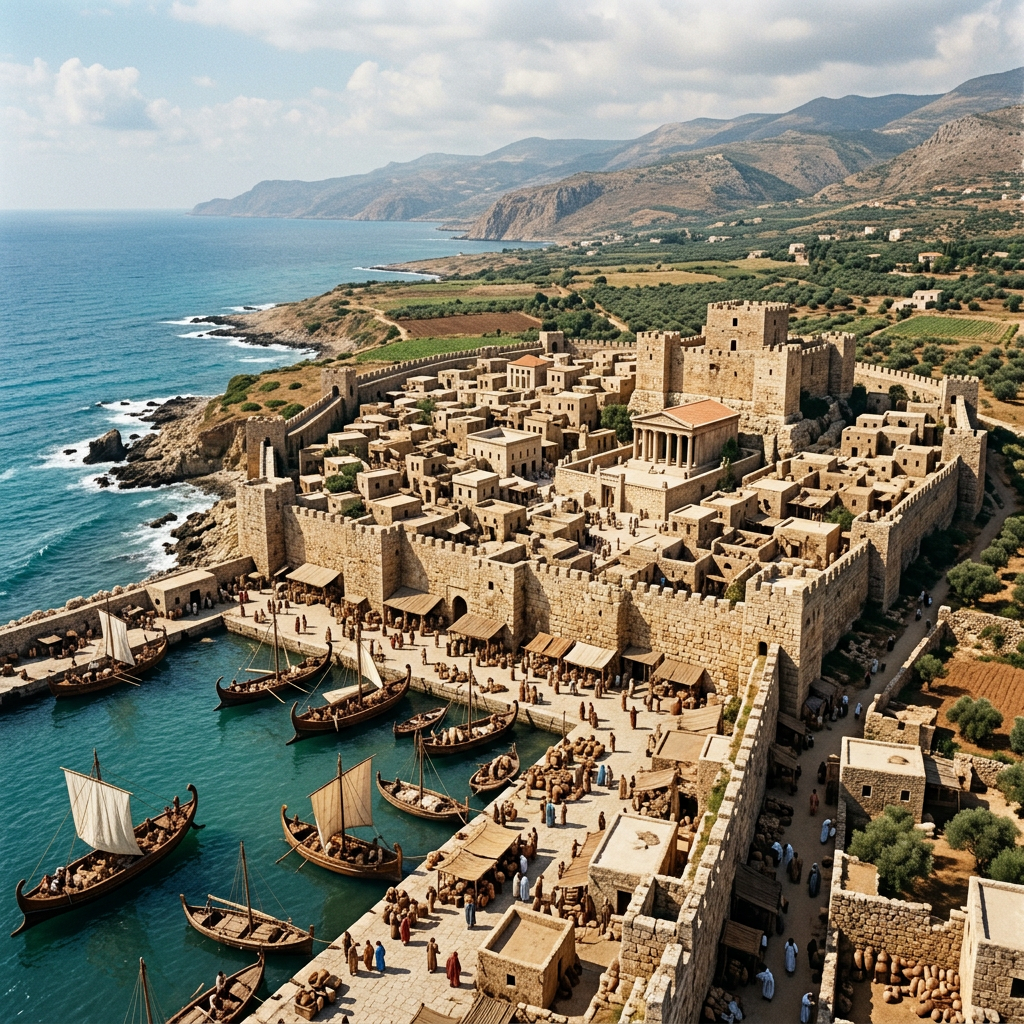
Byblos, Lebano
Byblos, Lebanon, also known as Jbeil, is one of the most fascinating ancient cities in the Mediterranean. Located on the Lebanese coast, approximately 40 kilometers north of Beirut, Byblos combines thousands of years of history with a living modern city, a picturesque harbor, traditional streets, restaurants, and an extraordinary archaeological landscape.
Recognized by UNESCO as a World Heritage Site in 1984, Byblos is famous for its remarkable continuity of human settlement and its important connection with the development and spread of the Phoenician alphabet. UNESCO describes the city as continuously inhabited since Neolithic times, with archaeological remains representing successive periods from early settlements and Bronze Age temples to Roman, Byzantine, Crusader, and Ottoman structures.
For travelers interested in ancient history, Phoenician civilization, archaeology, and Lebanese culture, Byblos offers a rare opportunity to walk through layers of history while remaining in a vibrant coastal town.
Where Is Byblos, Lebanon?
Byblos is situated on the Mediterranean coast in northern Lebanon, in the Mount Lebanon region. The modern city is commonly known by its Arabic name, Jbeil, while Byblos is the name widely used in historical and international contexts.
Its coastal location played an important role in the city’s development. The natural harbor helped Byblos become a significant maritime center and connected it with other parts of the Mediterranean and the ancient Near East.
Today, visitors can see the relationship between the ancient city and the sea by exploring the archaeological site, historic harbor, medieval streets, and old souk.
The combination of archaeological remains and everyday city life is one of the defining characteristics of Byblos, Lebanon. It is not simply an abandoned ancient settlement preserved behind museum walls. It is a living city that has continued to evolve around its ancient foundations.

The Ancient History of Byblos
The history of Byblos stretches back thousands of years. Archaeological evidence shows human settlement in the area from Neolithic times, making Byblos one of the world’s oldest continuously inhabited urban settlements.
UNESCO notes that the city’s history represents approximately 8,000 years of human presence, beginning with early communities of fishermen and developing through successive civilizations.
Over the centuries, Byblos experienced major cultural and political changes. The city came into contact with Egyptians, Phoenicians, Persians, Greeks, Romans, Byzantines, Arabs, Crusaders, Mamluks, and Ottomans. Each period contributed new buildings, architectural styles, traditions, and layers to the city.
This extraordinary accumulation of civilizations is one reason why the ancient city of Byblos is so important to archaeologists and historians.
Rather than representing only one civilization, Byblos provides a visual record of changing Mediterranean societies.
Byblos and the Phoenicians
When discussing Byblos ancient city, it is impossible to overlook its connection with the Phoenicians.
The Phoenicians were renowned maritime traders who established important commercial networks throughout the Mediterranean. Byblos became one of their important coastal centers and maintained strong commercial and cultural connections with other regions.
The city’s location allowed merchants to exchange goods across the Mediterranean. Timber, particularly valuable cedar from Lebanon, was among the resources associated with the region’s ancient trade.
Byblos also had important connections with ancient Egypt. Archaeological and historical evidence demonstrates extensive contact between the two regions, including commercial and cultural exchange.
The city’s Phoenician heritage remains one of the main reasons that Byblos, Lebanon attracts visitors interested in ancient Mediterranean civilization.

The Phoenician Alphabet and Byblos
One of the most important aspects of Byblos history is its association with the Phoenician alphabet.
Byblos is directly connected with the history and diffusion of this writing system. UNESCO highlights the city’s importance in the development and spread of the Phoenician alphabet, particularly through inscriptions discovered at the site.
Among the most famous archaeological discoveries is the sarcophagus of King Ahiram, which carries an important Phoenician inscription. The inscription is significant to the history of alphabetic writing and demonstrates the role of Byblos in the development and transmission of written language.
The connection between Byblos and writing also helps explain the historical relationship between the city’s name and the Greek word associated with books and writing.
The Phoenician alphabet eventually influenced other writing systems around the Mediterranean. Its historical importance therefore extends far beyond Lebanon.
For this reason, visiting Byblos archaeological site is not simply a journey through ancient architecture. It is also a journey through the history of human communication.
Exploring the Byblos Archaeological Site
The Byblos archaeological site is the heart of the city’s historical experience.
Walking through the site reveals an extraordinary mixture of archaeological remains from different periods. Visitors can encounter traces of ancient settlements, temples, fortifications, streets, and later structures.
UNESCO describes the site as a remarkable sequence of architectural remains extending from prehistoric settlement through the Bronze Age, Persian period, Roman era, medieval period, and Ottoman town.
One of the most striking features of Byblos is the way these periods overlap.
Instead of seeing one isolated ancient monument, visitors encounter a landscape where different civilizations built upon, modified, and reused earlier structures.
This makes Byblos archaeological site particularly valuable for understanding how ancient cities evolved over long periods.

The Temple Areas of Ancient Byblos
Among the archaeological discoveries at Byblos are the remains of ancient religious structures and monumental temples.
These remains provide evidence of the city’s religious and social importance during the Bronze Age and later periods.
The famous Temple of the Obelisks is associated with the religious landscape of ancient Byblos and is one of the archaeological features that helps visitors understand the scale and organization of the ancient settlement.
The religious remains also demonstrate that Byblos was more than a trading port. It was a developed urban center with religious institutions, political structures, residential areas, and commercial connections.
The Roman Influence on Byblos
The history of Byblos Lebanon continued to develop during the Roman period.
Roman rule introduced new architectural forms and urban features. Roads, public buildings, and other structures were constructed or modified, transforming parts of the ancient city.
The remains of Roman architecture are still visible within the archaeological area.
A Roman theater is among the features associated with this period, while other Roman remains demonstrate how the city was integrated into the wider Roman world.
The Roman period is another example of the layered character of Byblos. Rather than completely replacing the earlier city, Roman construction became another chapter in its long architectural history.

The Crusader Castle of Byblos
One of the most recognizable landmarks in the city is the Crusader Castle of Byblos.
Built during the medieval Crusader period, the castle occupies a prominent position within the archaeological site. Its construction incorporated stones and architectural elements from earlier structures, illustrating the way ancient building materials were repeatedly reused.
The castle provides visitors with an impressive view over the archaeological site and surrounding coastline.
Standing near the castle, it is possible to see how different historical periods coexist within a relatively small area: ancient temples, Roman remains, medieval fortifications, and the modern Lebanese city.
This is one of the reasons things to do in Byblos often begin with exploring the archaeological site and castle.
Byblos Old Town and the Traditional Souk
Beyond the archaeological ruins, Byblos Old Town offers a different experience.
Narrow streets, stone buildings, traditional architecture, small shops, restaurants, and historic churches create a distinctive atmosphere.
The old souk is particularly enjoyable for visitors who want to experience the living side of the city rather than focusing exclusively on archaeology.
According to local sources, the historic urban fabric contains buildings and streets reflecting later periods of Byblos’s history, including Ottoman influences.
Exploring the old town allows travelers to see how ancient Byblos has developed into a modern destination while retaining much of its historic character.

The Ancient Harbor of Byblos
The sea has always been central to the identity of Byblos.
The ancient city developed as a maritime center, and its relationship with the Mediterranean remains visible today through the historic harbor.
Modern fishing boats and small vessels occupy the harbor, continuing a maritime tradition that reaches back thousands of years. The modern harbor is not identical to the ancient port, but the city’s connection to the sea remains an important part of its character.
For visitors, the harbor is also one of the most atmospheric places to enjoy the city.
Walking along the waterfront provides an opportunity to combine history with the relaxed atmosphere of a Lebanese coastal town.
Why Is Byblos a UNESCO World Heritage Site?
Byblos became a UNESCO World Heritage Site in 1984 because of its exceptional historical and archaeological importance.
UNESCO emphasizes three major aspects of its significance: the city’s testimony to the development of Phoenician civilization, its remarkable architectural and archaeological remains, and its connection with the history and diffusion of the Phoenician alphabet.
The site is particularly valuable because it demonstrates continuity.
Thousands of years of construction and reconstruction can be seen within the same urban landscape. Neolithic settlements, Bronze Age temples, Persian fortifications, Roman structures, Byzantine remains, Crusader architecture, and later urban development all contribute to the story of Byblos.

Best Things to See in Byblos, Lebanon
For travelers planning a visit, several attractions stand out:
- Byblos Archaeological Site – Explore thousands of years of archaeological remains.
- Crusader Castle – Discover one of the city’s most recognizable medieval landmarks.
- Temple of the Obelisks – See an important part of the ancient religious landscape.
- Roman remains – Explore evidence of Byblos during the Roman period.
- Byblos Old Souk – Walk through traditional streets and browse local shops.
- Old Harbor – Enjoy the Mediterranean setting and historic maritime atmosphere.
- Historic churches – Discover later chapters of Byblos’s religious and architectural history.
- Waterfront restaurants – Combine sightseeing with Lebanese food and views of the Mediterranean.
Together, these attractions make Byblos an appealing destination for travelers interested in history, archaeology, culture, architecture, and Lebanese heritage.
Byblos Today: Where Ancient History Meets Modern Lebanon
One of the most remarkable things about Byblos Lebanon is that its history is not confined to the archaeological site.
Modern Jbeil continues to function as a living coastal city. Residents, businesses, restaurants, artisans, fishermen, and visitors share a landscape shaped by thousands of years of human activity.
The city therefore offers something different from a conventional archaeological destination.
You can spend the morning examining ancient Phoenician remains, walk through medieval streets in the afternoon, and enjoy the Mediterranean waterfront in the evening.
This mixture of past and present is central to the character of Jbeil Lebanon.

Why Visit the Ancient City of Byblos?
Byblos offers a unique opportunity to experience an extraordinary concentration of history in one place.
Its importance goes beyond its age. The city helps tell the story of Phoenician civilization, Mediterranean trade, ancient religion, alphabetic writing, Roman urban development, medieval architecture, and the continuing evolution of Lebanese coastal culture.
For history enthusiasts, the ancient city of Byblos provides an exceptional archaeological experience. For travelers, its harbor and old town offer a relaxed Mediterranean atmosphere. And for anyone fascinated by writing and communication, its connection to the Phoenician alphabet gives the city global historical significance.
Above all, Byblos demonstrates that an ancient city does not have to exist only as ruins.
It can remain a living place.
For thousands of years, people have built, traded, worshipped, written, traveled, and lived on this Mediterranean coast. Today, visitors can walk through the same landscape and experience the extraordinary layers of history that make Byblos, Lebanon one of the world’s most remarkable ancient cities.
Conclusion: Discovering Byblos, Lebanon
Byblos, Lebanon, is much more than an ancient archaeological site. It is a remarkable living city where thousands of years of history, culture, architecture, and Mediterranean life come together. From its early Neolithic settlements and Phoenician heritage to its Roman remains, Crusader Castle, historic souk, and picturesque harbor, Byblos offers visitors an extraordinary journey through the history of the Mediterranean.
Its connection to the Phoenician alphabet gives Byblos a significance that reaches far beyond Lebanon, while its archaeological remains provide a fascinating glimpse into the civilizations that shaped the ancient world. At the same time, the charming streets of Jbeil, traditional shops, restaurants, and waterfront allow visitors to experience the city as a vibrant destination rather than simply a place of ruins.
Whether you are passionate about archaeology, fascinated by ancient civilizations, interested in Phoenician history, or simply looking for a beautiful cultural destination in Lebanon, Byblos is a place worth discovering. Walking through its ancient streets is a reminder that history is not always something confined to museums—it can remain alive within a city, its people, and its landscape.
A visit to Byblos, Lebanon is ultimately a journey through time: from the beginnings of urban civilization to the modern Mediterranean world. Few destinations offer such a remarkable combination of ancient history, cultural heritage, and coastal beauty in one unforgettable place.

Fortisetliber’s View
Byblos reminds us that the greatest cities of history are not always those that conquered the most territory or built the largest empires. Sometimes their importance lies in what they preserved, connected, and passed on.
For thousands of years, Byblos stood between the mountains of Lebanon and the Mediterranean Sea, connecting peoples, merchants, languages, and cultures. Its ships carried goods across the ancient world, while its inscriptions helped preserve one of humanity’s most important steps in the history of writing. The stones of Byblos therefore tell a story that is larger than Lebanon itself.
What makes Byblos particularly remarkable is its endurance. Kingdoms disappeared, empires changed, languages evolved, and new religions transformed the Mediterranean, yet the city continued to exist. Each generation built upon the remains of the previous one, leaving behind another layer of memory.
For Fortisetliber, Byblos is therefore more than an ancient Phoenician city. It is a reminder that civilization is built not only through conquest, but through continuity—through the preservation of knowledge, trade, culture, and human memory.
Walking through Byblos today is, in a sense, to walk through thousands of years of human experience. Ancient stones become witnesses to the simple fact that civilizations pass, but what they create can continue to speak long after they are gone. Byblos remains one of those rare places where the past does not feel distant. It stands beside us, quietly reminding us that every modern city is also building the ruins and memories that future generations will inherit.
Leave a Reply